Say Hello to Christopher Bailey, MD
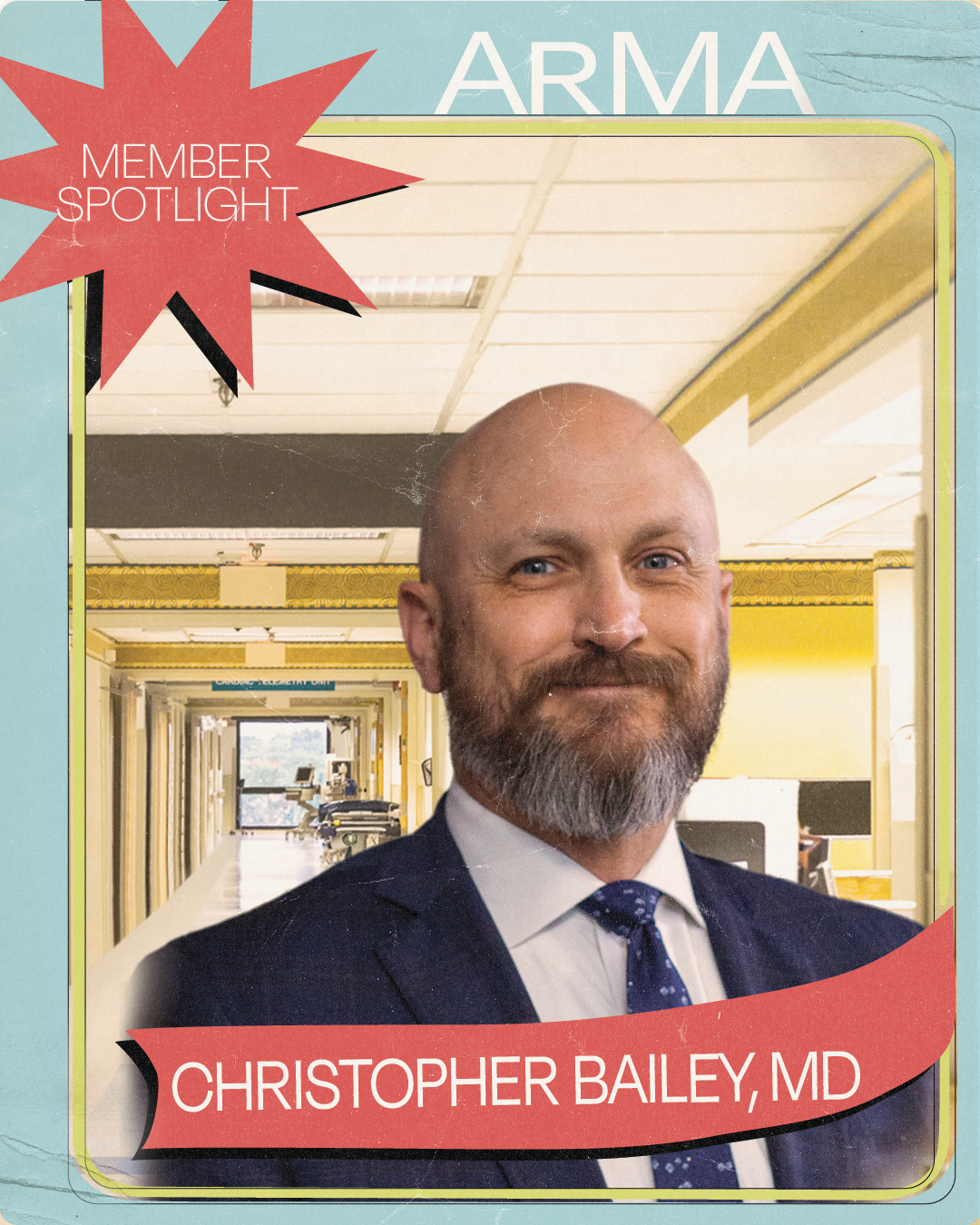
We are pleased to introduce you to the first Arizona Medical Association (ArMA) Member Spotlight of 2023, Christopher Bailey, MD! Dr. Bailey is a graduate of the Mayo Clinic School of Medicine, where he was trained in anesthesiology and pain medicine. In addition to practicing medicine and pursuing new, exciting hobbies, Dr. Bailey is very active in organized medicine; he currently serves on ArMA's Board of Directors and chairs our Communications Committee.
In his interview for the Member Spotlight, Dr. Bailey shares a fascinating glimpse into the life of a physician — the ups, the downs, and the wonderment of discovering new ways to treat those in need.
Learn all about Dr. Bailey’s journey with medicine below!
What inspires you?
My undergraduate degree is in Studio Art, and I worked for a long time in advertising, so inspiration is multifaceted for me. Inspiration can be a sunrise or sunset, a song or work of art, a challenge like riding in the Willcox Flyer charity race, or the nearly daily goosebumps I get when I hear that a patient I have treated gets relief from their pain. They're all amazing, and I feel lucky to be able to experience them all.
What has been the most memorable event in your career?
Meeting my future wife while volunteering and then convincing her I am not a complete idiot over the next year, so we could start dating.
What do you enjoy doing in your spare time?
My son and I have taken up mountain biking, and I am always excited to enjoy hiking Arizona's amazing trails. I volunteer with the Sonoran Desert Weedwackers, protecting the desert from invasive plants that threaten native saguaros and their habitat.
What place would you most like to visit?
Norway, to see the Fjords and Northern lights.
If you weren't a physician, what would you be up to right now?
Still writing jokes for restaurants' billboards.
What's the most interesting thing you've read or seen this week?
Our team focuses on lifelong learning and maximizing the potential of our colleagues. Our partners presented on emerging pain management strategies and interventions, which we are amongst the first in the world to be able to offer our patients right here in Tucson.
What would you like remembered about you?
I was a kind and loving husband and father who found his professional passion later in life and strove to do the right thing for his patients and his community. That, and my luxurious head of hair.
What is one message you would give to your 18-year-old self?
Focus your intensity on kindness, your energy on compassion, and enjoy UofA's small success in football right now because it won't last.
What is your favorite meal?
Carolina's green chile plate and fresh tortillas.
What is your least favorite meal?
Anything with mayonnaise.
What's your idea of a perfect day?
Wake up as the sun rises with a cup of coffee. Go riding a new trail with my son, learning a new trick along the way. Stop for a doughnut or an Eegee on the way home. Then go record shopping with my daughter at Hurricane Records, and meet my wife for lunch at a new restaurant. End the day with a good book.
What is the one accomplishment you're most proud of?
My admission to my dream medical school (that a lot of people don't know exists!)
What do you like best about living in Arizona?
The mountains that just spring from the valleys, the sunsets that never fail to amaze, and the kindness of the people in Tucson.
What does a typical day in your life look like?
The day begins early, catching up on lab results and new records in the EMR. We start seeing patients at 7AM, and my medical assistant and scribe work together with me to collect vital information about the patient, not just to continue therapies but constantly work to diagnose the underlying issue and come up with a durable treatment to address it. Often, there's not a "fix," but coming up with a durable solution that minimizes the use of medications where possible is crucial. Today is an exciting time to be involved in pain management because there's never been a time when so many options for treatment are available. In the last year, we've seen a groundbreaking treatment for painful, diabetic neuropathy, novel treatments for sacroiliac, joint dysfunction, vertebrogenic pain, and minimally invasive lumbar decompression procedures. In medical school, I thought pain management was just prescribing opioids. I was lucky enough to learn from world leaders, that it is, and should be, a very small part of chronic pain management. Lunch is spent catching a bite and catching up on paperwork. The other half of my day is spent performing procedures, consulting with our advanced practice providers, and seeing other patients in consultation. At the end of some days, I perform vertebral augmentation procedures, a life-changing treatment for patients with vertebral body compression fractures. After this, I try to finish up my paperwork (it seems we physicians do have a lot of paperwork) and then head home.
Are you a collector? If so, what do you collect?
New hobbies! For ten years, it was cooking, then woodworking, and now it's mountain biking.
What would people be surprised to learn about you?
I sculpted an art piece that was displayed in the White House. And that, yes, I did once have long, luxurious hair.
What prompted you to become involved in organized medicine?
Since graduating from college, I have always committed to serving my community and profession. In addition to donating time to food banks, mentoring, and organizations like the International Rescue Committee, advocating for my profession is an important part of my life. In my previous career, I served at the local and National levels in professional nonprofits. When I entered medicine, what was truly shocking was the threats to patients' access to quality care, expansions of scope of practice by non-physicians, and other substantive threats to our ability to serve our patients within our legislative bodies. I started donating to political action committees ASAPAC and ArMPAC (Arizona Medical Political Action Committee) while in training.
Why is ArMA important to you and your colleagues?
My involvement is a commitment to our patients and profession. It benefits all of us, regardless of our involvement. No matter the level of involvement my colleagues have, be it as a participant in Doctor of the Day, visiting Capitol Hill, or donating to ArMPAC, participation in ArMA gives back to the house of medicine and protects it.