Get to Know Dr. Paula Mayer!

February 6, 2023
Portrait of Leah Sanford in glasses, smiling against a gray background with a purple frame and award badge.

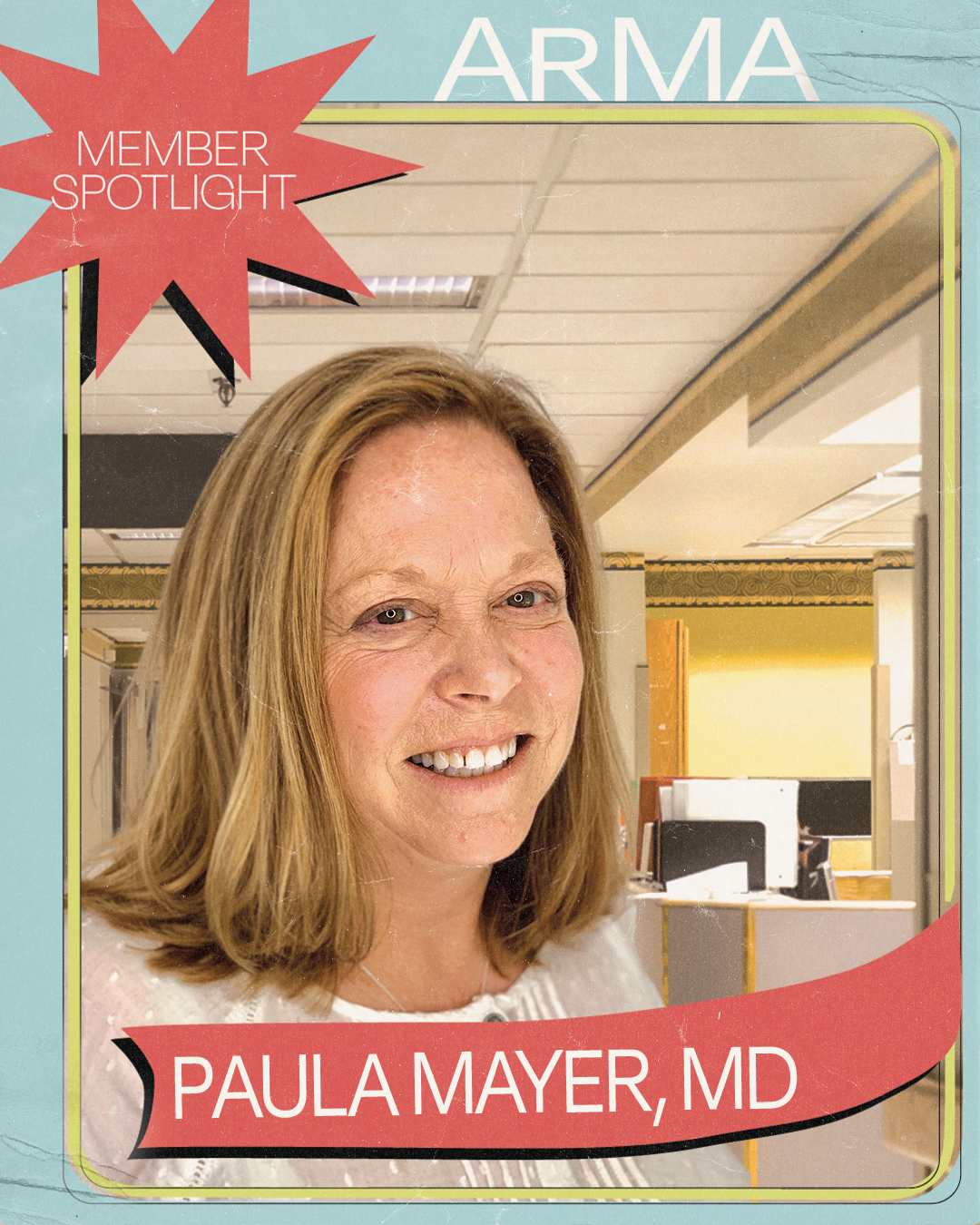
We are excited to introduce you to the Arizona Medical Association's (ArMA) Member Spotlight for February, Paula Mayer, MD! Dr. Mayer is an emergency medicine physician in Tuba City, Arizona, and currently serves as the Chief Medical Informatics Officer at Tuba City Regional Health Care Corporation. Within ArMA, Dr. Mayer serves on the Communications Committee, influencing publications like this one!


To some, Dr. Mayer's journey with medicine may seem unconventional. Beginning her career in television news, Dr. Mayer sees medicine through a different lens, providing patients with solid communication and quality care.


Learn all about Dr. Mayer's journey with medicine in the interview below! 

What is one message you would give to your 18-year-old self? 


Pick a goal, any goal, then move in that direction. Time will pass faster than you expect, and you might as well get something done in the meantime.


What inspires you? 


Finding solutions to problems. Sometimes it's the answer to why an ED patient has a particular symptom. Sometimes it's looking at why the EHR isn't functioning as we expect or would like. Problem-solving gives me energy and fires me up to find more problems.


If you weren't a physician, what would you be up to right now? 


If I weren't a physician, I would be a National Transportation Safety Board investigator. I love figuring out what went wrong or is going wrong.


What place would you most like to visit? 


I would like to visit a place in the far north where I can see the Aurora Borealis. I have always wanted to see the Northern Lights in person instead of in pictures.


What would you like remembered about you? 


I hope my colleagues will remember that working with me was a good experience and that I always had something a little different or offbeat to contribute. I think that having a career in TV news before medicine gives me a different perspective than those who had a more traditional science or medical background. 


What would people be surprised to learn about you?


I think some people would be surprised that I spent the first ten years of my career in TV control rooms and crouching next to a camera during news conferences.


What do you like best about living in Arizona? 


The breathtaking beauty of the desert driving from Tuba City to Phoenix. I grew up along the Pacific coast, so the saguaro cactus and red dirt still seem very exotic to me.


What prompted you to become involved in organized medicine? 


I felt like organized medicine didn't fully represent my interests, and I wanted to promote change from the inside.


By Admin User August 7, 2026
Abrazo Arizona Heart Hospital Launches Largest Expansion in Its History Investment Expands Inpatient and Procedural Capacity to Meet Rising Demand for Cardiovascular Care The Abrazo Arizona Heart Hospital in Phoenix announced last week that it is undertaking the largest expansion in its history. The new construction will add inpatient and procedural capacity to serve more Arizonans in need of heart and vascular care. Meeting Arizona's Growing Demand for Heart Care Abrazo explained that the expansion is necessary to support Arizona's continued population growth, which is driving increased demand for cardiovascular services. The added capacity will allow the hospital to not only treat more patients requiring cardiac, vascular, and critical care, but also continue its participation in clinical research and innovation.  Part of a Multi-Year Investment Strategy In its press release, Abrazo describes the expansion as the latest phase of ongoing, multi-year investments intended to advance care and meet the evolving healthcare needs of communities across the state. The hospital did not report an anticipated completion date for the project. Source: Abrazo Health
By Admin User August 7, 2026
Hobbs Highlights Milestone in Ongoing Partnership With Undue Medical Debt Gov. Katie Hobbs announced this week that more than $1 billion in medical debt has been erased for nearly 671,000 Arizonans, marking a significant milestone in the state's ongoing partnership with the nonprofit Undue Medical Debt. How the Program Works The initiative, first launched in 2024, purchases qualifying medical debt from hospitals and collection agencies for a fraction of its value before eliminating the debt entirely for eligible patients. Who Qualifies According to the governor's office, recipients do not need to apply for the program. It is available to Arizona residents who: Receive low- and moderate-income Have medical debt that represents a substantial share of their annual income A Flashpoint in the 2026 Election Season Healthcare affordability has been at the forefront of Arizona's political conversation as the 2026 election season intensifies. Supporters argue that relieving burdensome medical debt can improve: Families' financial stability Creditworthiness Willingness to seek needed healthcare Critics of similar programs have generally questioned whether debt forgiveness addresses the underlying drivers of rising healthcare costs or simply treats the financial consequences after care has been delivered. As debates continue over healthcare affordability and access, Arizona's medical debt relief initiative is expected to remain a prominent example in broader discussions about how states can help patients facing significant medical expenses.