Member Spotlight: Sarah Lee-Davisson, MD
We're proud to introduce Sarah Lee-Davisson, MD, FACS, as ArMA's January Member Spotlight.
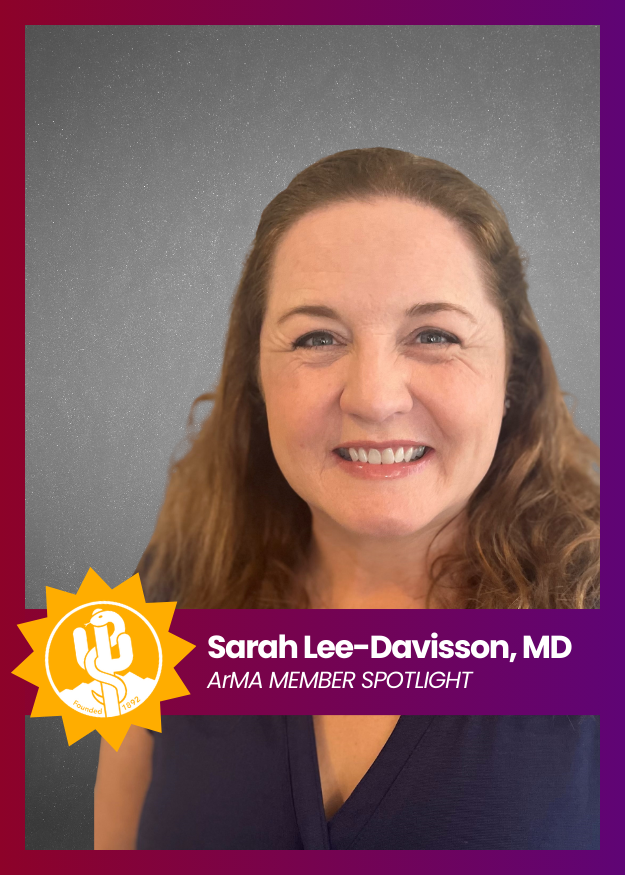
Dr. Sarah Lee-Davisson is a board-certified general surgeon.
Dedicated healthcare advocate, and passionate champion for physician wellbeing. She currently serves patients in Tucson and the larger Southern Arizona community.
Dr. Lee-Davisson has found that organized medicine amplifies the fulfillment her career offers. By working with local and national organizations — including the Arizona Medical Association, the Arizona Chapter of the American College of Surgeons, and the Pima County Medical Society — she has been able to extend her impact on the issues that matter most to her, such as the 'Stop The Bleed' initiative and connecting with colleagues.
In her interview, Dr. Lee-Davisson reflects on finding her calling in surgery, how she applies the concept of humanism in her daily practice, and why physicians have to think bigger.
Read more about Dr. Lee-Davisson and her journey below!
Watch Dr. Lee-Davisson's Full Interview
In this conversation, Dr. Lee-Davisson shares her journey from a moment of medical school uncertainty to becoming a leader in surgical advocacy, her passion for supporting fellow healthcare workers, and why she believes physicians need to "think bigger" about the future of medicine.
Topics Discussed in This Interview:
Finding Her Calling: From medical school uncertainty to finding her place in surgery
Doctor of the Day Experience: Meeting legislators and discovering they need physician input
Stop The Bleed Initiative: Planning Advocacy Day at the Arizona State Capitol
Finding Her Calling: From medical school uncertainty to finding her place in surgery
Doctor of the Day Experience: Meeting legislators and discovering they need physician input
Stop The Bleed Initiative: Planning Advocacy Day at the Arizona State Capitol
Career Journey
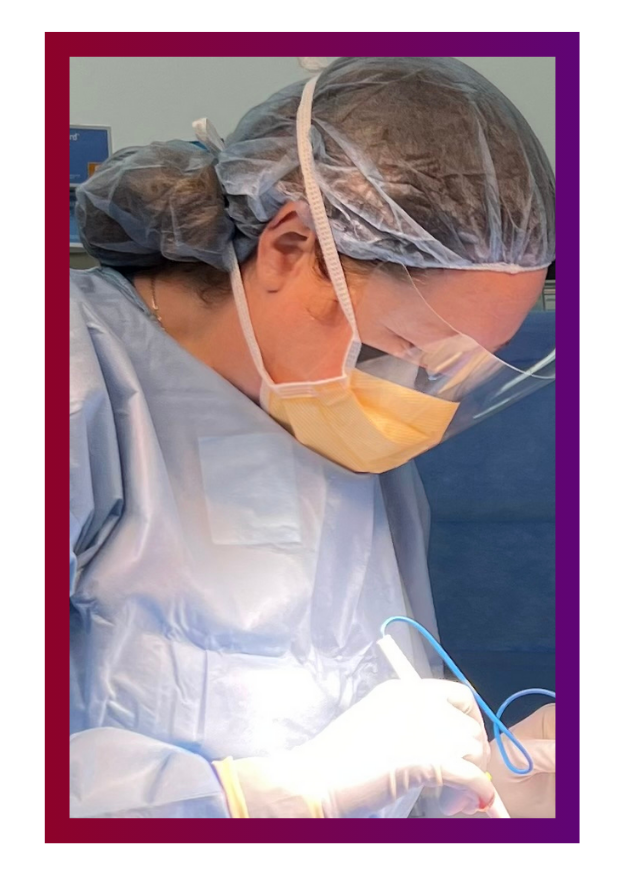
What drew you to a career in medicine and, more specifically, surgery?
"I was always interested in medicine and a helping career! I did have a moment of panic in my third year of medical school because I thought I would be a pediatrician or maybe geriatrician, so I scheduled lots of kid and medicine related rotations but really didn't like any of them. I was already so in debt from college and medical school that I knew I had to become a doctor, but worried that maybe I had made a mistake. Then my mandatory surgery rotation came up. My first shift was insane, as most times at USC County Hospital are, and I loved every single second. The pace, the instant results, the camaraderie of the team, the awesome trauma fellow who had so much confidence as he guided me through my first incision ever. It was amazing and I never looked back."
"I loved every single second. The pace, the instant results, the camaraderie of the team... It was amazing and I never looked back."
— Dr. Sarah Lee-Davisson
Where is your favorite place to grab food in Arizona?
"If you are ever in the area, make sure to stop at La Casita Mexican Restaurant in Mammoth. When I had my office in Oro Valley, patients would always bring me burritos from there and they were THE BEST!"
Advocacy and Leadership
You are an impressive physician advocate in Arizona and on the national stage. How have you grown your skillset as an advocate over the years? What aspect of advocacy do you enjoy the most? Which do you enjoy the least?
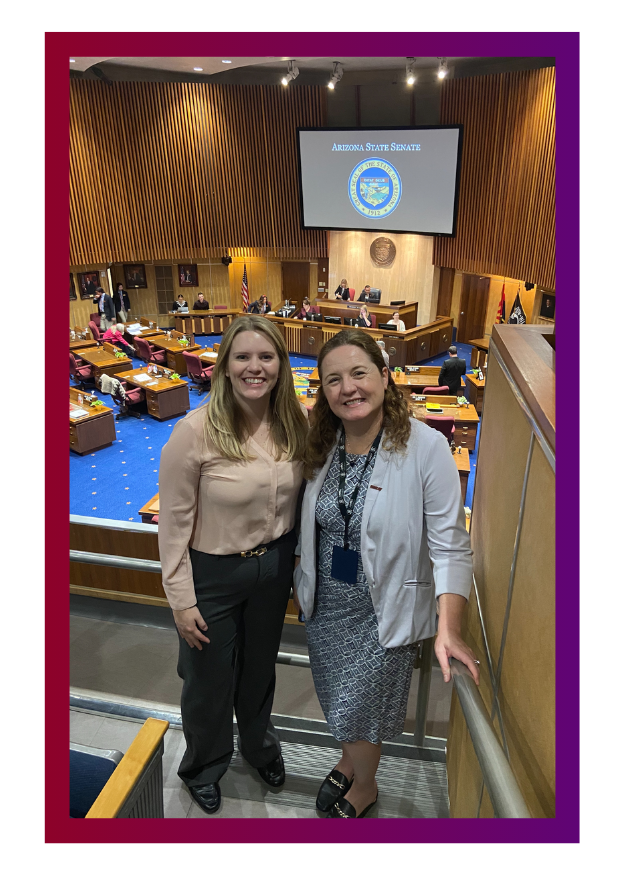
"Thank you for that compliment! I still feel like a novice with advocacy. My interest in advocacy started during the pandemic when I took an Advisory Board leadership course. There was a theme during that 18 months all about advocacy, that we need to think BIGGER about the state of medicine than just what directly is difficult for our team, our practice/hospital, or even our community. The solutions are only to be found in integrating the urgent issues right in front of us that affect our day-to-day lives with the bigger universe of what rules and laws are getting passed that impact us all.
Learning how to get involved in a more meaningful way was much less structured, but has been super fun and exciting. I listened to podcasts, read books by healthcare advocates, and started signing up for ArMA advocacy learning events and Doc of the Day. My first Doc of the Day event, I realized how the legislators are just normal people, making really important decisions, sometimes with limited information. They actually need our input, and appreciate it! I also got involved in some community groups with ideals that dovetail with mine regarding healthcare, education, physician concerns, women's rights, and many of them had incredible learning opportunities… I signed up for anything to learn more. Zoom meetings about request to speak, letters to editor, bills that the AMA or ACS were concerned about, etc. I also became a poll worker for the last two elections. With the American College of Surgeons, I went to an advocacy event in DC and got to work on some of the priorities for the house of surgery with our senators and congressman. I go to that every year now! And each event or learning opportunity leads to a new contact, a new podcast or book to check out, and new opportunities. It remains an incredible journey, and the constant learning and connection with like-minded people is my favorite part. My least favorite part is how slow legislative change is. The gains are not at all immediate or guaranteed, and this is exceedingly hard for a surgeon to deal with sometimes!"
"We need to think BIGGER about the state of medicine than just what directly is difficult for our team, our practice, or even our community."
— Dr. Sarah Lee-Davisson
How do you unwind after a stressful day?
"There is nothing better than watching an Arizona sunset with a glass of wine, or taking a walk with a friend (human or canine!) after a stressful day. My other guilty pleasure is reality TV shows… I get a little addicted to shows like 'Love It or List It,' 'Love is Blind,' 'Love on the Spectrum,' etc."
You clearly value continued learning, even as a physician with decades of education under your belt. Why is furthering your knowledge, especially about politics and legislation, important to you? How has it changed your perspective on healthcare?
"As I became an expert in my chosen field and career, I found myself asking 'what next?' I still love operating and taking care of patients, but it no longer routinely provided the exciting challenges it once did. I felt compelled also by my core values, which are connection and stewardship, to do more for healthcare if I am able, and I know I am able. Advocacy became not only an exciting new learning opportunity, but also a way to increase my sphere of influence."
What is the last book you read?
"I love reading, both fiction and non-fiction. I recently finished 'The Christie Affair' by Nina de Gramont for my fiction, and it was a super fun story, with a 'who-dun-it' twist that was awesome. For non-fiction, I read another Brené Brown book called 'The Gifts of Imperfection.' It was amazing, but any of her books will change your life."
Humanism & Values
You are passionate about humanism in medicine. What is the most impactful way you've implemented humanism into your practice of medicine?
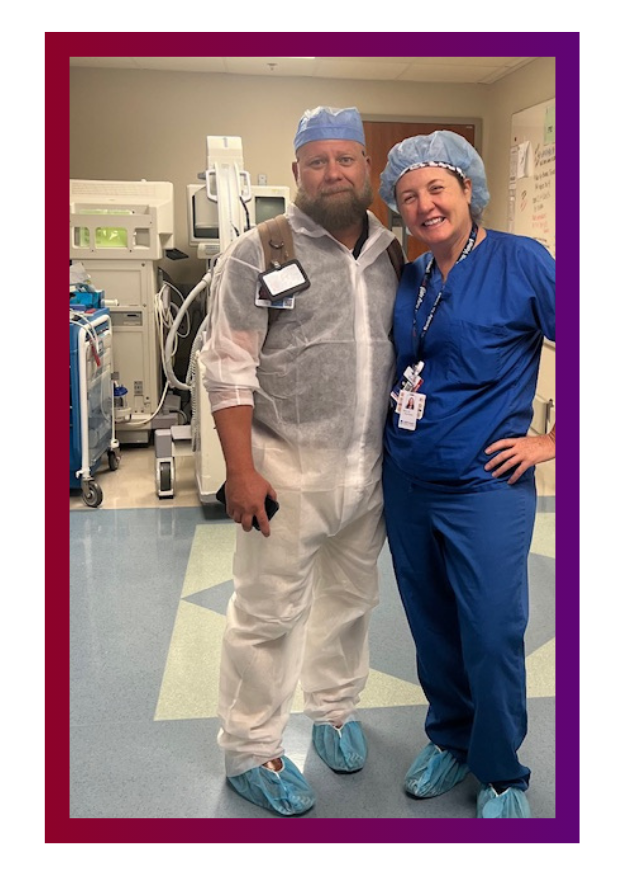
"Humanism in medicine—I know this typically applies to how we see and treat our patients. I am definitely passionate about that and have spent my entire clinical career focusing on doing that better all the time.
However, I find that my particular impact in humanism in medicine over the last few years has been in how I care for, fight for, and treat my colleagues and other healthcare workers. We have tough jobs, and the troubles in medicine can really injure us. When we stick together, and recognize each other for being amazing, it goes a long way for healing. I deliberately don't walk around the hospital with my nose in my phone as much as possible, choosing to acknowledge and smile at all the hospital workers I pass. I give compliments to the people I work with, and reach out when I know they had a hard interaction or a complication. Knowing we are not alone, and supported, makes us all better at our jobs and that directly affects how we are able to show up and care for our patients and communities."
"When we stick together, and recognize each other for being amazing, it goes a long way for healing."
— Dr. Sarah Lee-Davisson
How do you unwind after a stressful day?
"There is nothing better than watching an Arizona sunset with a glass of wine, or taking a walk with a friend (human or canine!) after a stressful day. My other guilty pleasure is reality TV shows… I get a little addicted to shows like 'Love It or List It,' 'Love is Blind,' 'Love on the Spectrum,' etc."
What are you most excited about in the New Year, both personally and professionally?
"New Year! Always a time of reflection for me. Personally, I am excited to continue my journey of growth with my surgeon coaching group. Coaching has been an integral part of my support and growth over the last couple of years and I love that I get to continue that. It has helped me to be a more effective surgeon, but also a happier and healthier person, friend, wife, and mother.
Professionally, I am super excited about the Advocacy Day at the state capitol that I am planning on behalf of the Arizona chapter of the ACS. I am the advocacy chair, and took a bill that one of my colleagues is introducing to get Stop The Bleed kits at schools as the theme for a day where as many surgeons as we can get will come to the state capitol, teach legislators how to Stop The Bleed and why this is important. I also really want the surgeons in our state to get to know the legislators so they can have ongoing influence and relationships with people making decisions that impact us all."
What was the biggest pivot point in your career?
"The biggest pivot in my career was when I made the decision to close my private practice. I actually moved to Arizona after training to open my own practice, and I truly loved it. After 7 years, when the ACA passed, I just couldn't keep up with the additional administrative financial burden, nor could I financially compete with the hospitals hiring general surgeons which cut into my referral pattern. I became hospital employed and it was a major mindshift and practice style change for me. I learned a lot during that process!"
If you weren't practicing medicine, what would you be doing?
"I think I would be a professional organizer! I love lists and organizing. Nerdy but true."
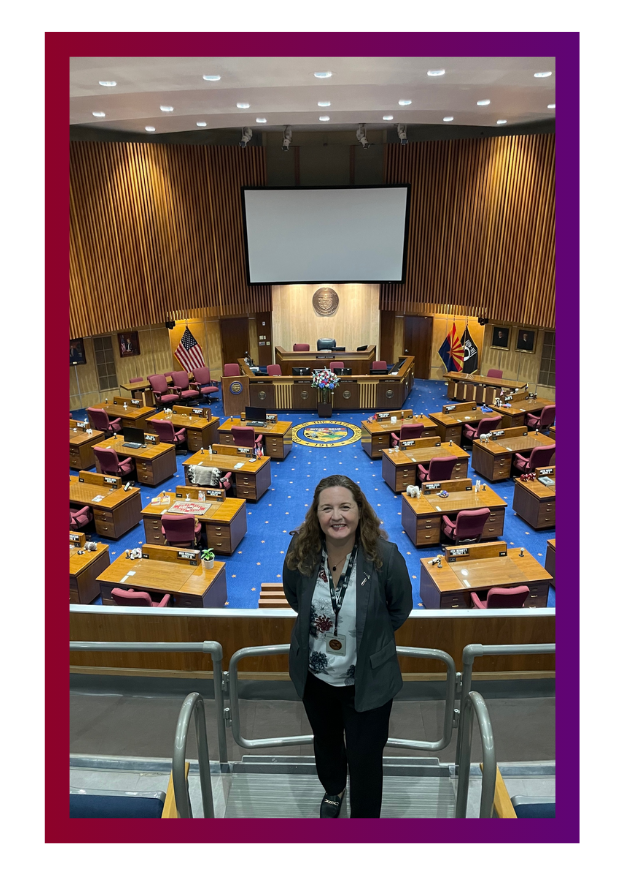
Why is being a member of organized medicine important to you?
Why is ArMA important to you?
"Being a member of organized medicine was my first organized commitment to my profession, starting in medical school, and it is important! Even for folks that are too busy or financially strapped to do much else outside of their direct clinical duties, joining your local and national Medical Association and specialty associations to me is critical—those numbers matter. This was my first step showing my commitment to the future of healthcare for physicians (and therefore for patients).
ArMA is my vehicle for constant contact with healthcare advocacy in our state. It is my source of statewide contact with my colleagues, to find out what they are experiencing and how we can work together to solve some of the problems we face."
Personal Insights
What personal or professional achievement are you most proud of?
"This is a super basic answer, but 100% true, my son Ryan is who I am most proud of, and my involvement in his life is my best achievement, and always will be."
What's the best advice you've ever received?
'It's okay for some people to be wrong about you.' I love that advice because it takes me out of convincing mode during conflict and lets me tap into who I authentically am. A more impactful way of saying 'just be yourself.'"
"It's okay for some people to be wrong about you... A more impactful way of saying 'just be yourself.'"
— Dr. Sarah Lee-Davisson
Join Dr. Lee-Davisson and Arizona's Leading Physicians
Become an ArMA member and be part of the advocacy that's shaping the future of healthcare in Arizona.