Member Spotlight: Mustafa Suppah, MD
We're proud to introduce Mustafa Suppah, MD, as ArMA's February Member Spotlight.
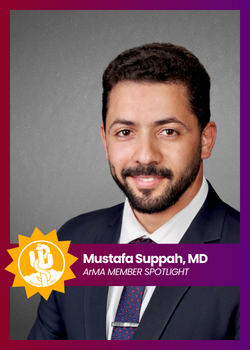
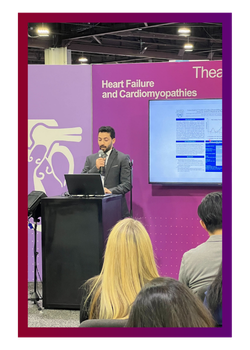
Dr. Mustafa Suppah is an aspiring cardiologist training and practicing in Phoenix. He currently serves as a chief resident at Creighton University.
a research scholar at Mayo Clinic, and serves as chair of the Arizona Medical Association's Resident & Fellow Section.
As a first-generation physician who grew up and attended medical school in Egypt, Dr. Suppah brings an especially unique perspective to medicine — one shaped by different healthcare systems, diverse patient populations, and an unwavering commitment to accessible, equitable care. Through his leadership, research, and clinical work, he continues to advocate for systemic change that supports both patients and physicians alike.
In his interview, Dr. Suppah reflects on his path from Egypt to the U.S., what he's learned as a young leader in organized medicine, and how the next generation of physicians must push for smarter, more compassionate healthcare systems.
Watch Dr. Suppah's Full Interview
In this conversation, Dr. Suppah shares his journey to becoming a cardiologist, how being a father has changed his life, his insights on medical leadership, and his vision for building a healthcare system that truly values both patients and physicians.
Career Journey
What drew you to a career in medicine and, more specifically, Cardiology?
"Medicine became personal for me very early. I lost my father when I was young, and I saw firsthand how having a sick family member can impact the entire family. That experience made me want to be the kind of physician who can be present in moments like that. Cardiology drew me in because it's intellectually challenging, which I look for every day, and I have always been fascinated by the dynamics and physics of how the heart works. It offers a perfect mix: an acute setting where you can walk into a room and change the course of someone's life that same day, while also allowing you to follow patients long term and build meaningful relationships."
"I saw firsthand how having a sick family member can impact the entire family. That experience made me want to be the kind of physician who can be present in moments like that."
— Dr. Mustafa Suppah
How has your journey from Egypt to the U.S. shaped your approach to medicine?
"Training in different countries taught me to be flexible and grounded. In Egypt, you learn to rely on strong clinical skills and deep connections with patients in the setting of limited resources. In the U.S., I've seen how technology and well-structured systems can improve outcomes when used thoughtfully. Having lived in both worlds helps me care for patients with empathy, cultural awareness, and a practical mindset."
What was the biggest pivot point in your career?
"Deciding to move from Egypt to the U.S. for training. A new system, culture, and system meant a lot of learning on the fly, but it changed everything in the best way."
Leadership & Advocacy
As Chair of ArMA's Resident & Fellow Section and a Chief Resident, what has been the most valuable leadership lesson you've learned?
"The biggest lesson I've learned is that leadership isn't about being the loudest voice in the room. It's about listening, showing up consistently and leading by example. People don't expect you to fix everything, but they do expect honesty, follow-through, advocacy and support when needed."
"Leadership isn't about being the loudest voice in the room. It's about listening, showing up consistently and leading by example."
— Dr. Mustafa Suppah
What prompted you to become involved in organized medicine?
"As a resident, I saw how many challenges residents face that aren't about medicine itself, but rather about workload, burnout, access to resources, and feeling unsupported. Organized medicine gave me a way to advocate beyond my own program and be part of meaningful conversations about change. It made me feel like I could contribute to something bigger than myself."
Why is ArMA important to you?
"ArMA gave me a sense of belonging and a voice as a resident. It's an organization that genuinely cares about physicians at every stage and gives trainees and even students the chance to lead and advocate early in their careers. For me, ArMA represents community, mentorship, and the chance to help shape the future of medicine in Arizona and hopefully eventually nationwide."
What would people be surprised to learn about you?
"Despite being in leadership and giving many presentations, I'm actually pretty low-key and an introvert. I value quiet time, family moments, and a good night's sleep…when that happens."
Changing Healthcare
As the next generation of medicine, what do you hope to change about the healthcare system?
"I hope we build a system that works better for both patients and physicians. Too often, great care is limited by access, paperwork, or burnout. I want to help create a healthcare culture that values prevention, equity, and physician well-being, not just productivity. My goal is to be part of the group that pushes for smarter systems while never losing sight of the patient sitting in front of us."
"I want to help create a healthcare culture that values prevention, equity, and physician well-being, not just productivity."
— Dr. Mustafa Suppah
Heart Health Insights
What is something you wish more people knew about heart health?
"I wish more people understood that heart disease doesn't start suddenly, it builds over time. Small things like blood pressure, diabetes, tobacco use, cholesterol, stress, sleep, and lifestyle really matter and can change the trajectory of someone's heart and overall health."
Personal Insights
What personal or professional achievement are you most proud of?
"Personally, becoming a father. It instantly redefined my priorities, balance, and what truly matters. Professionally, I'm proud of my journey as a first-generation physician and the first and only person from my family to move to the U.S; it was very challenging at times, but here we are."
What is one message you would give your younger self?
"Don't be too harsh on yourself, you're not behind! Keep showing up, doing the work, and things will fall into place."
How do you unwind after a stressful day?
"I'm easy to satisfy: quality time with my family (my wife and two sons), a good workout, and a peaceful drive home. If I can fit all three into a day, it's perfect."
Join Dr. Suppah and Arizona's Leading Physicians
Become an ArMA member and be part of the advocacy that's shaping the future of healthcare in Arizona.