ArMA Member Spotlight: Vanuyen Pham!
We're proud to introduce Vanuyen Pham as ArMA's May Member Spotlight!
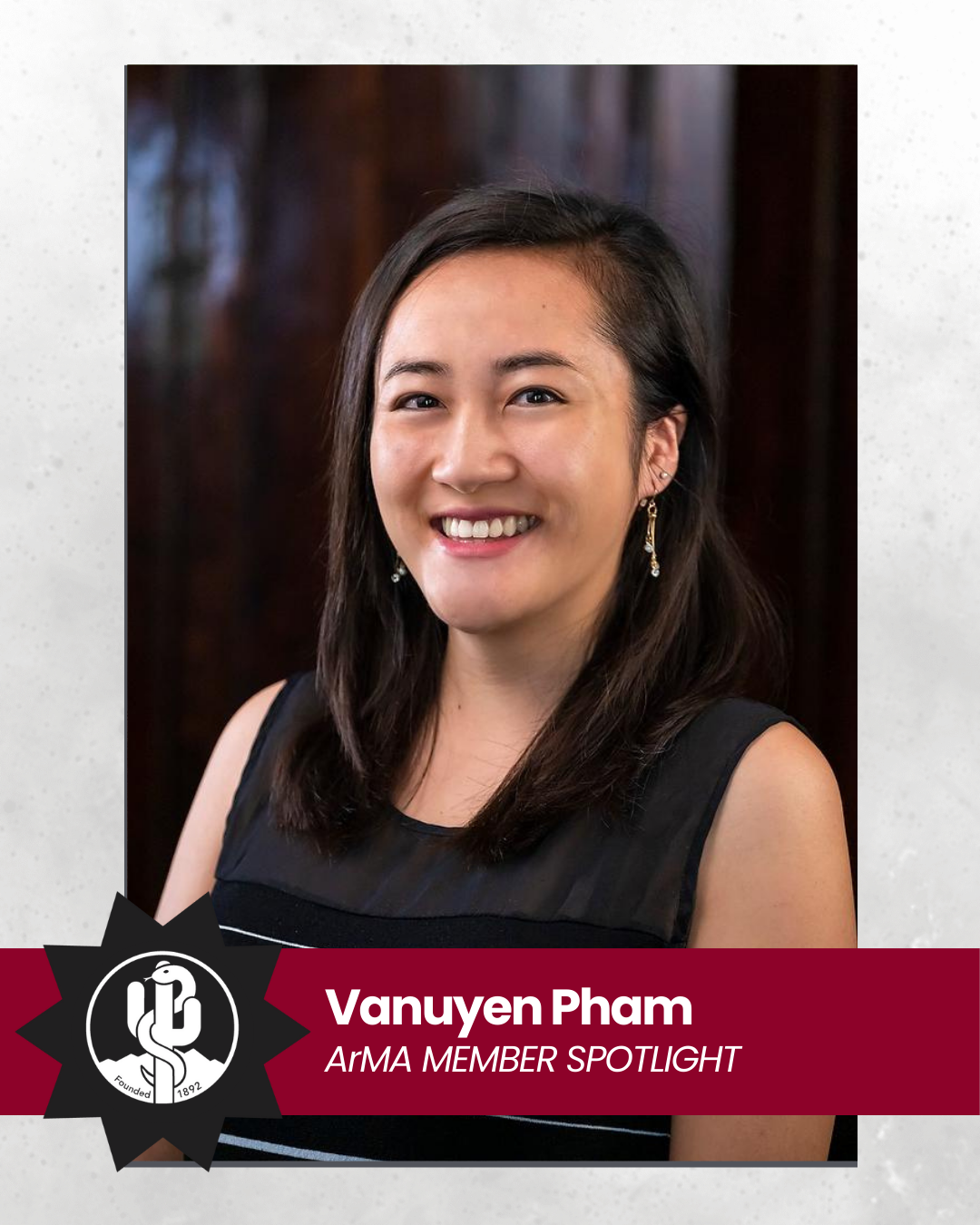
For Vanuyen Pham, medicine and advocacy go hand in hand. A proud second-generation Vietnamese American and medical student at Creighton University School of Medicine in Phoenix, Vanuyen entered medicine with a passion for community-building, policy change, and amplifying voices that are too often unheard. Her background as a history major at Stanford University and former program manager at the Economic Security Project fuels, in part, her commitment to driving social change.
Today, she leverages her position as a medical student to stand up for patients, including facing Medicaid cuts. In her interview with ArMA, Vanuyen shares how her background in the humanities shaped her approach to medicine, her first experience at the Arizona State Capitol, and her perspective on the importance of physician-led advocacy.
Learn more about Vanuyen's story below!
You’ve had experience in nonprofit and government work — how have those roles influenced your approach to medicine and advocacy?
"I learned a lot from my previous roles about collaboration, coalitions, and the importance of forming strong, trusted relationships. Policies can’t be properly made without working with folks who are directly impacted. I see that as very tied to part of why I chose to go into medicine. I think physicians are in a very key position to work closely with patients, see what policies would be most beneficial for patients, and have the access to spaces to be listened to. I learned about physicians whose clinical care directly informed their advocacy work, and I deeply admired that. It was hopeful to see that it was possible. That is the tension and balance that I think I will continue to keep exploring in the coming years."
What was the most memorable moment during your Doctor of the Day experience with ArMA?
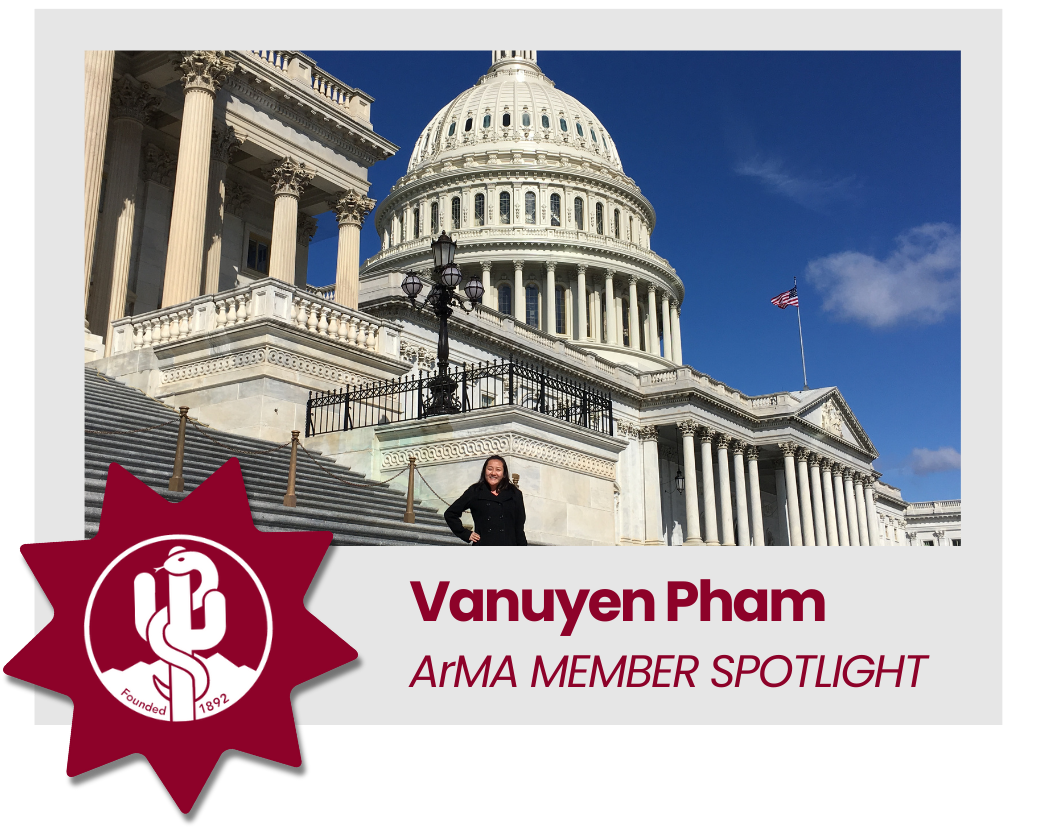
"This was the first time I visited the State Capitol, and I learned a lot. Things like learning about how the Arizona state legislature is structured with staffing and how different it is from other states or federally was interesting. It was also nice to stop in on a caucus meeting and observe how representatives ask questions on different bills, and see how ArMA staff (shoutout Eva and Amanda) advocate for bills to legislators. I think it’s helpful to learn how the system works. On the outside we can call legislators and submit comments, but seeing how things are structured and what priorities may be important to legislators is useful.
In college, I met a community organizer who was heavily involved in state advocacy. I didn’t know anything really at the time and only had a small idea that I might be interested in policy and politics. I wish I could remember the exact example she told me about, but it was an example of junior high school students organizing to have a policy initiated at their school. While I don’t remember the specific details, this stood out to me because it made policy seem approachable and possible – anyone could get involved in advocacy. In college, I saw this through students pushing to have more funding for ethnic studies professors and community centers. I’ve thought before of advocacy and policy seeming intimidating, and it is, to think about it on a big level, sweeping changes. But it doesn’t need to be that big.
I guess that’s what led me to writing the article on possible Medicaid cuts. I read an article about the House proposed bill and was alarmed. I saw a small note about Arizona being one of the states with a trigger law, and just kept reading articles from there that led to me learning more information. I reached out to Dr. Murphy for support, and she looped me in to the work that ArMA was doing. I had no illusions of making any big changes. But I think I was just curious and I felt like it was important, and I wanted to be able to do something small on my own.
So I would say, if you see something that you don’t think is quite right or should be changed, do something about it. Follow what makes you curious. It could be starting off small like researching a topic that piques your interest, and go from there. Reach out for help, because lots of people know more than you do and are happy to help."
How has your background in the field of humanities influenced your approach to medical education?
"A key part of writing history papers was sifting through sources, formulating an argument, and then citing evidence to support the thesis. I think this is essentially what a differential diagnosis is, which is at the heart of medicine. While the two subject matters are fairly different, I would say being curious and constantly asking questions is important in both. In history, it’s about asking what resources can be found to fill in the picture, and whose perspective the writings are from. In medicine, I’m still learning that along with memorization, asking why things happen helps connect the dots and cement the knowledge. I did love being a nerd and digging around for sources in archives, and I do see that investigative part in medicine as well in trying to find the answers to your questions. There is also an aspect of honing in on very specific details, while keeping in the back of your mind that context is everything and that having a sense of the bigger picture is also important.
It also forced me to be better at articulating my thoughts. When you’re in a two person seminar for two hours, you do have to do the readings, learn how to read quickly to get the gist of things, and have things to say. So I would say it helped me become better at communicating. Overall, it is a different background and has taken time to adjust to learning the science content, but I’m glad to have had the experience of taking humanities classes. And I always knew I enjoyed them and thought in high school that I wanted to major in history! I always felt like studying history was basically learning different people’s stories – reading historical fiction when younger will likely do that to you."
What song has been on repeat lately?
"'Do What You Do' - Baek Hyun, EL CAPITXN, and UMI."
What’s the last book you read?
"Water Moon by Samantha Sotto Yambao – whimsical fantasy about the adventures of a magical pawnshop owner. I didn’t love all parts of it, but it ended up being a comforting read, and I thought the world-building was very creative."
If you weren't pursuing medicine, what would you be up to right now?
"I might have still been in some sort of role in the nonprofit or policy space. I always thought being Chief of Staff might be cool. There’s another world where I’m fully on the creative side as a writer or doing something like a PhD in history. A possible middle ground, if I had more of a quantitative background, would be a journalist on health policy issues for an organization like Kaiser Family Foundation."
Can you share a clinical experience that helped you connect the dots between policy decisions and their real-life impact on patients?
"There wasn’t necessarily a single experience but more when I was a Vietnamese interpreter in a county hospital ED in college, I realized I was interested in looking at bigger picture factors. Many of the patients reminded me of my grandparents and parents, from the way they talked about using green oil for pain relief or wind chills causing their symptoms. The fact that interpretation services are available in the hospital is a result of both hospital policies, and a reflection of how the Civil Rights Act codified language access on a federal level. I saw how critical language access was in ensuring patients got the best care they could, and while it’s something we are lucky to see as the norm now, was a conscious policy that was implemented.
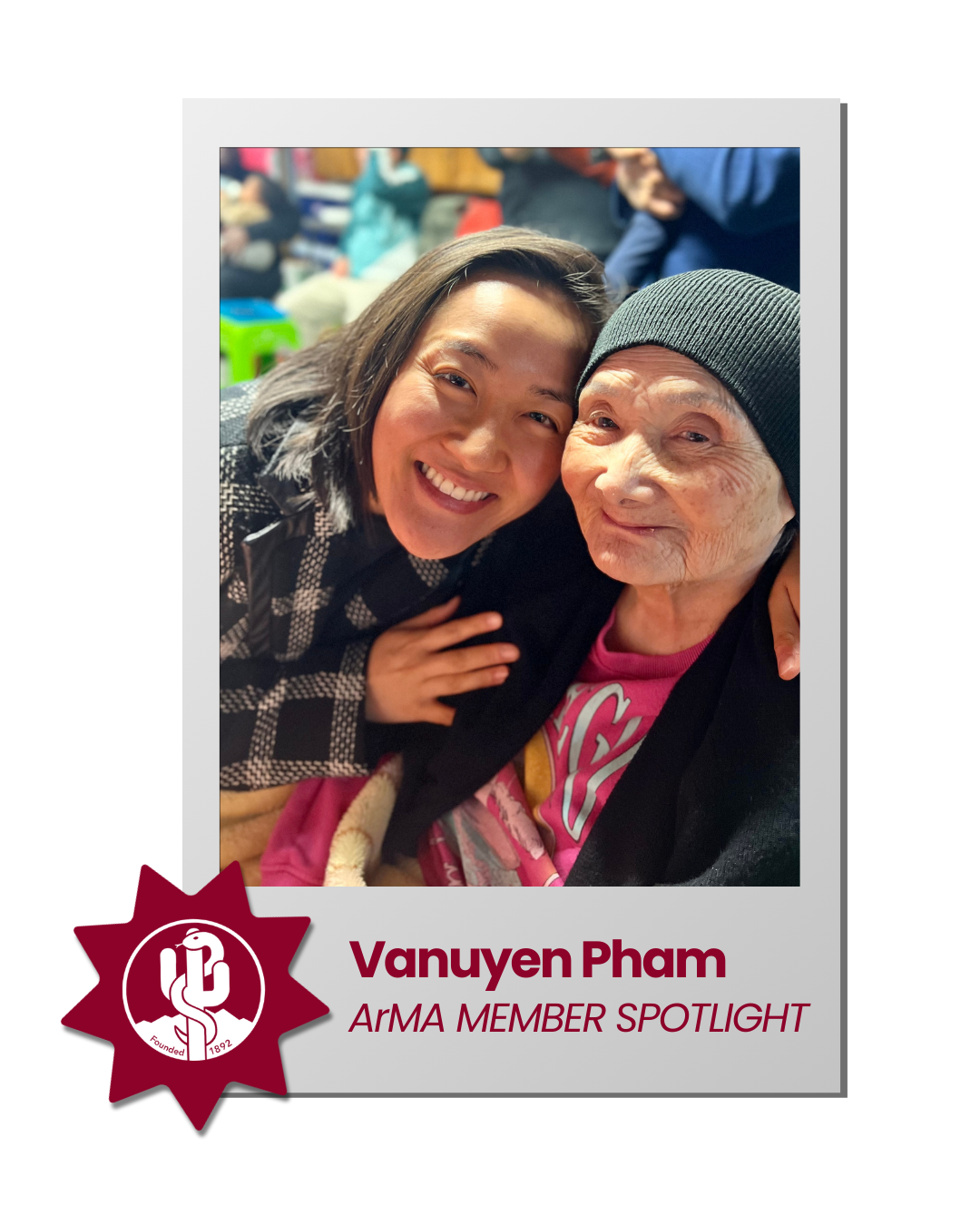
There were other aspects of ED care, like seeing unhoused patients often coming in, that made me question how beyond their hospital care, what support they were receiving outside. What were the economic and housing policies in place that related to healthcare? Policies can seem abstract, but they shape our lives. Language access policies help patients like my own parents do things like apply for insurance, make appointments, communicate with their doctors, and better understand their care. Learning about history too, I became curious about policies and the policymaking process because of how both harmful and helpful policies greatly influence people’s lives."
What is one message you would give to your 18-year-old self?
"Keep going – you have no idea what’s in store for you. When things get hard, remember why you do what you do. Things aren’t always going to turn out the way you expect, and that’s okay. Just keep going, and be happy."
What do you like best about living in Arizona?
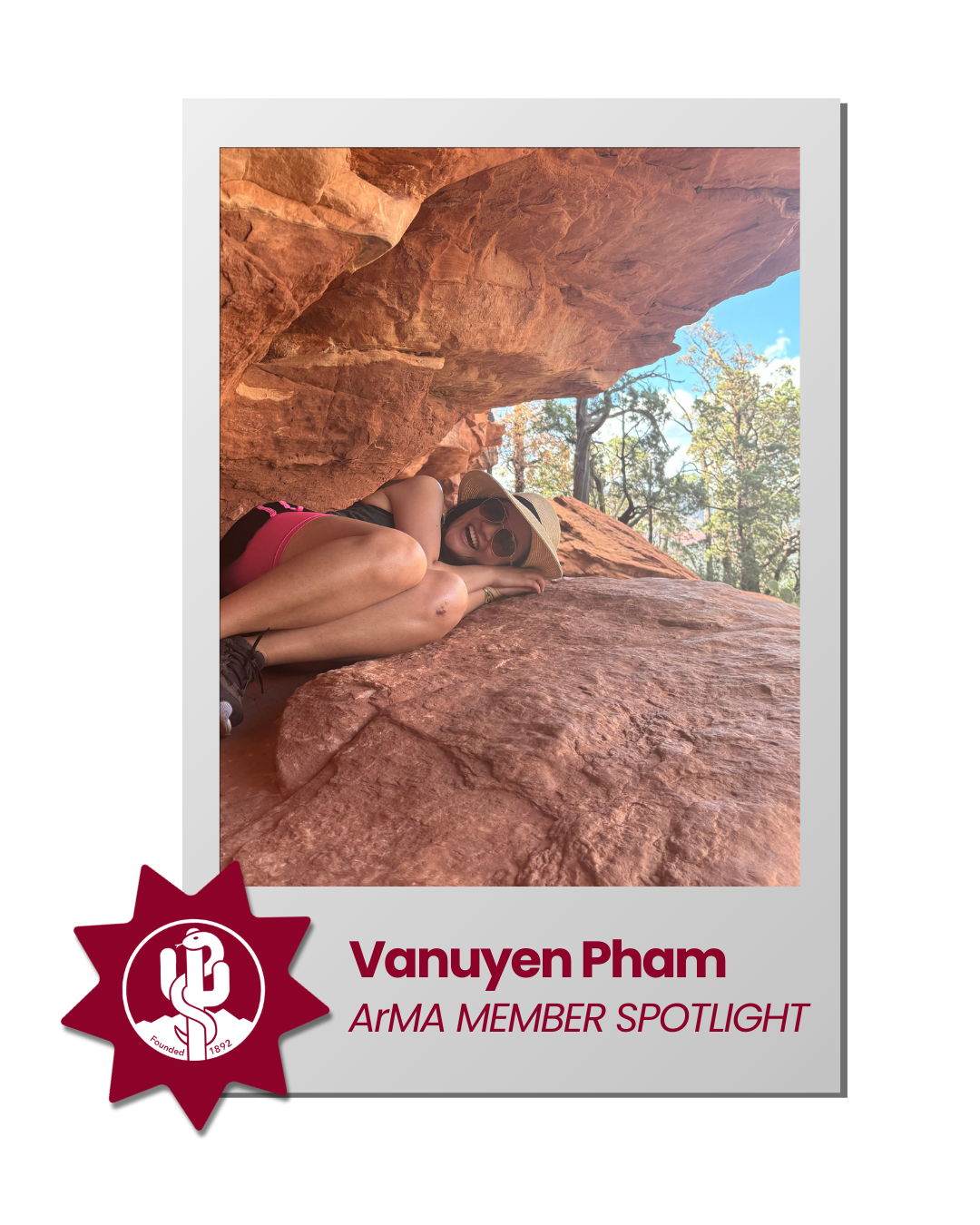
"This is my first time in a new state, so there’s been lots of exploring! I’ve been able to go with friends to see the fall leaves at Flagstaff, (attempt to) ski for the first time there, and hike in Sedona. I’ve also loved exploring new places and finding places for myself here like Palabras Bookstore in Phoenix and Blue Corn Cafe & Bakery in Glendale. I’ve liked trying new things like reading at an open mic, getting into running, watching the sunrise at Papago Park. Also, I have to say Arizona sunsets in particular are quite beautiful."
What prompted you to become involved in organized medicine?
"I don’t think I heard about the term “organized medicine” before ArMA, but it seems like a natural progression of my interests. I remember a class activity in college learning about the Chevron refinery fire in 2012 in Richmond, CA. In the exercise, we role-played being community members meeting with refinery representatives to voice concerns about the environmental effects of the refinery on health. One thing that stood out and that we all reflected on after was that part of the exercise involved the “community members” standing while the “corporation employees” were seated. A small detail, but one that had us thinking about power dynamics at play in a room and any setting.
I think this question about access to resources has been at the background of my mind throughout my education and career so far. I am very lucky to have had access to spaces and opportunities that my family before me never dreamed of having. And I do see it as my responsibility to leverage the opportunities I am given to make the most of it.
The spaces I’ve been a part of have only emphasized to me how important community is. Community-driven policies are where we need to keep heading to. Unfortunately, by nature of how things work, a lot of positions where the most change can be made is not readily accessible to most people. I see my role in being part of organized medicine as meeting others who are driven by the same hopes to collectively work together to make things a little better for the people we love. Sometimes things don’t work out and sometimes it feels like things get broken down and have to be rebuilt. It can be demoralizing. So change is slow, but there’s no way to do big things alone, and I truly believe the only way forward is working together. Small groups with a big and persistent vision can do a lot. "
Why is ArMA important to you and those you lead?
"Being in a classroom setting again for the past few years, it has been easy to get lost in the books and theory. ArMA works to make concrete changes and is completely based on what members believe is important and worth fighting for. It has been a good reminder for me to remember why I do this work, and again, the importance of community and collective action."