ArMA Member Spotlight: Teresa Bertsch, MD!
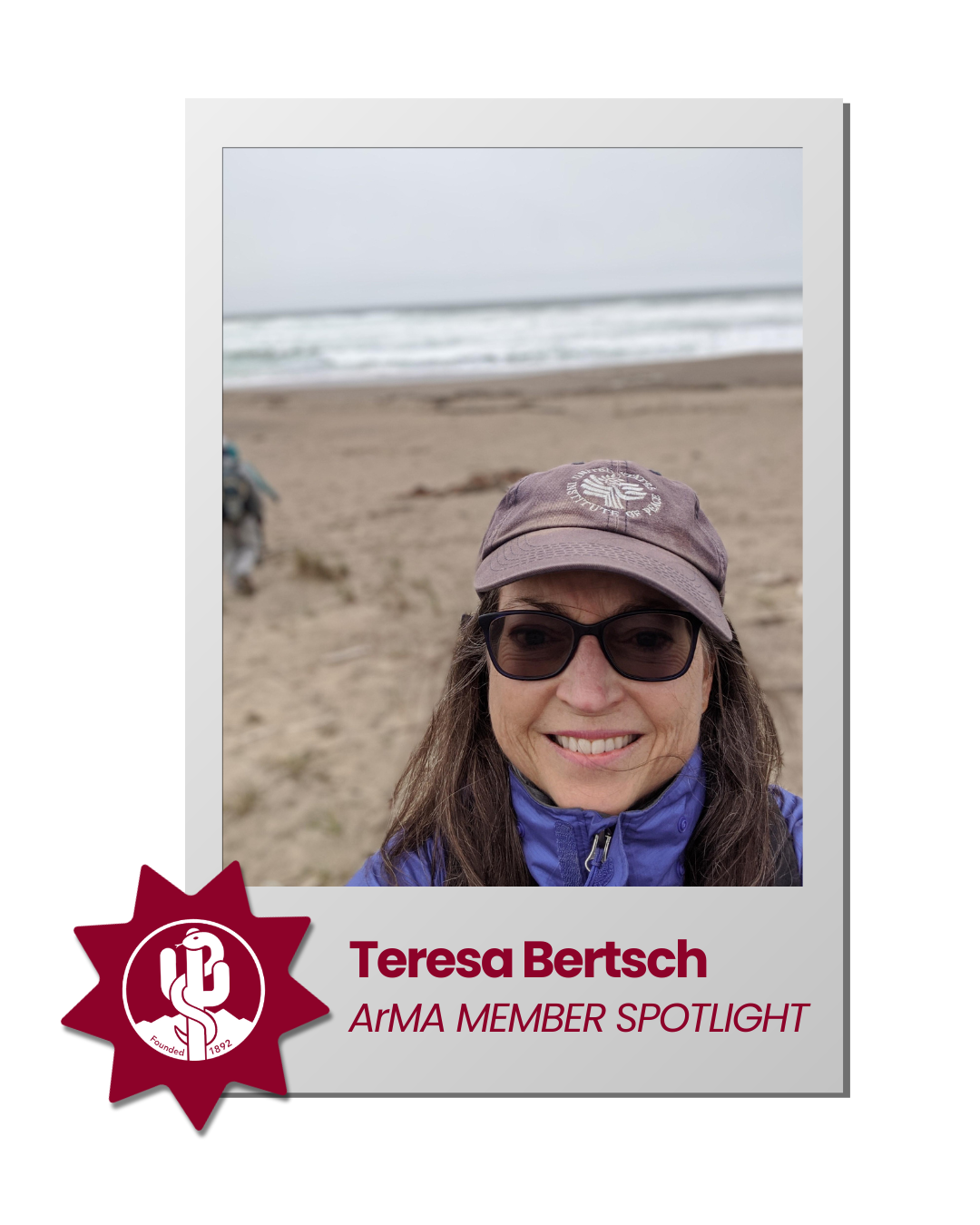
We're proud to introduce Teresa Bertsch, MD, as ArMA's June Member Spotlight.
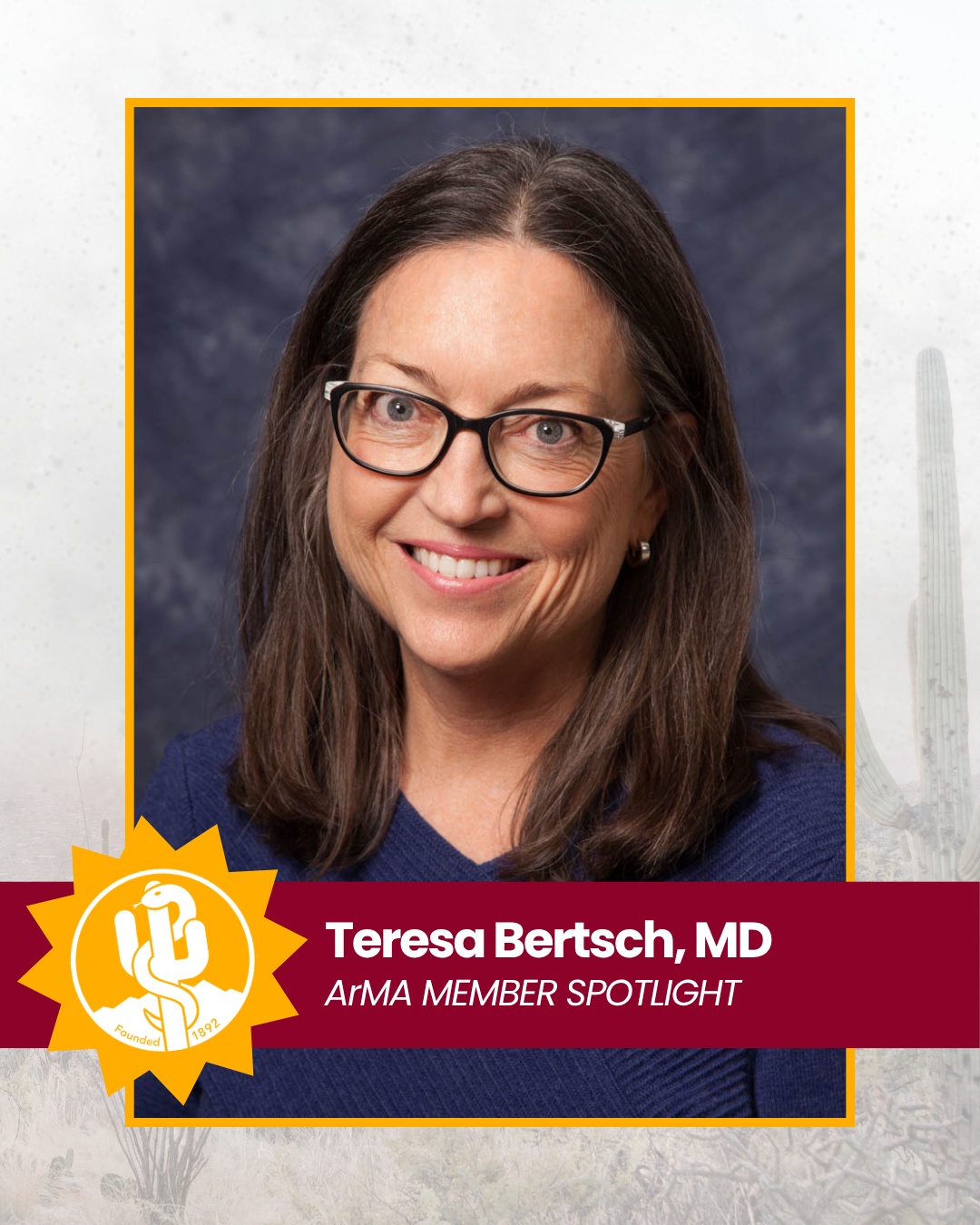
Dr. Teresa Bertsch is a psychiatrist living in Flagstaff, where she currently serves as the NARBHA Institute’s Chief Medical Officer and Chief Wellbeing Officer. In these roles, she leads efforts to improve follow-up care after hospitalizations and emergency visits while also strengthening support systems for physicians and other healthcare professionals.
In her interview, Dr. Bertsch shares how an ordinary trip to the library transformed her approach to life, patient care, and leadership. Through a deeper exploration of the human condition, she has since developed a framework that drives her to lead with compassion, develop effective systems, and make the world a better place.
She is consistently recognized as kind, generous, and graceful by colleagues. For her outstanding achievements and reputation, Dr. Bertsch was honored with the Health & Fitness Award during ArMA’s 2025 Health Care Awards Ceremony earlier this year.
We invite you to read more about Dr. Bertsch’s journey with medicine and how a misspelled word was an ironic prediction of her future below!
Your colleague described you as being rooted in humility, generosity, and grace. How do you keep centered in a space of compassion in your work and life?
Back in about 2000, I was at the public library looking for resources for my patients when I came across two books that changed so many things that I knew about the mind, emotions and my approach to life. One was called “Working with Anger” by an American Buddhist nun, and one was a compilation of The Mind & Life Dialogues between neuroscientists, philosophers and HH Dalai Lama, called “Destructive Emotions.” The idea that my negative emotions, like anger, harm me more than the targets of my anger made so much sense. How could I, as a psychiatrist, not have understood this before? The Buddhist theory of mind and its antidotes to all the different types of suffering are so compelling and practical for personal and professional wellbeing. New research also backs up those approaches.
In medicine and especially public psychiatry, we are privy to the diversity of humanity’s suffering in ways that most people only experience through movies and novels. Being able to have a framework to understand the human condition and our habitual responses to it has been life-changing and life-affirming for me.
I resonate with HHDL’s statements that “kindness is my religion” and “If you want others to be happy, practice compassion. If you want to be happy, practice compassion.”
How do you unwind after a stressful day?
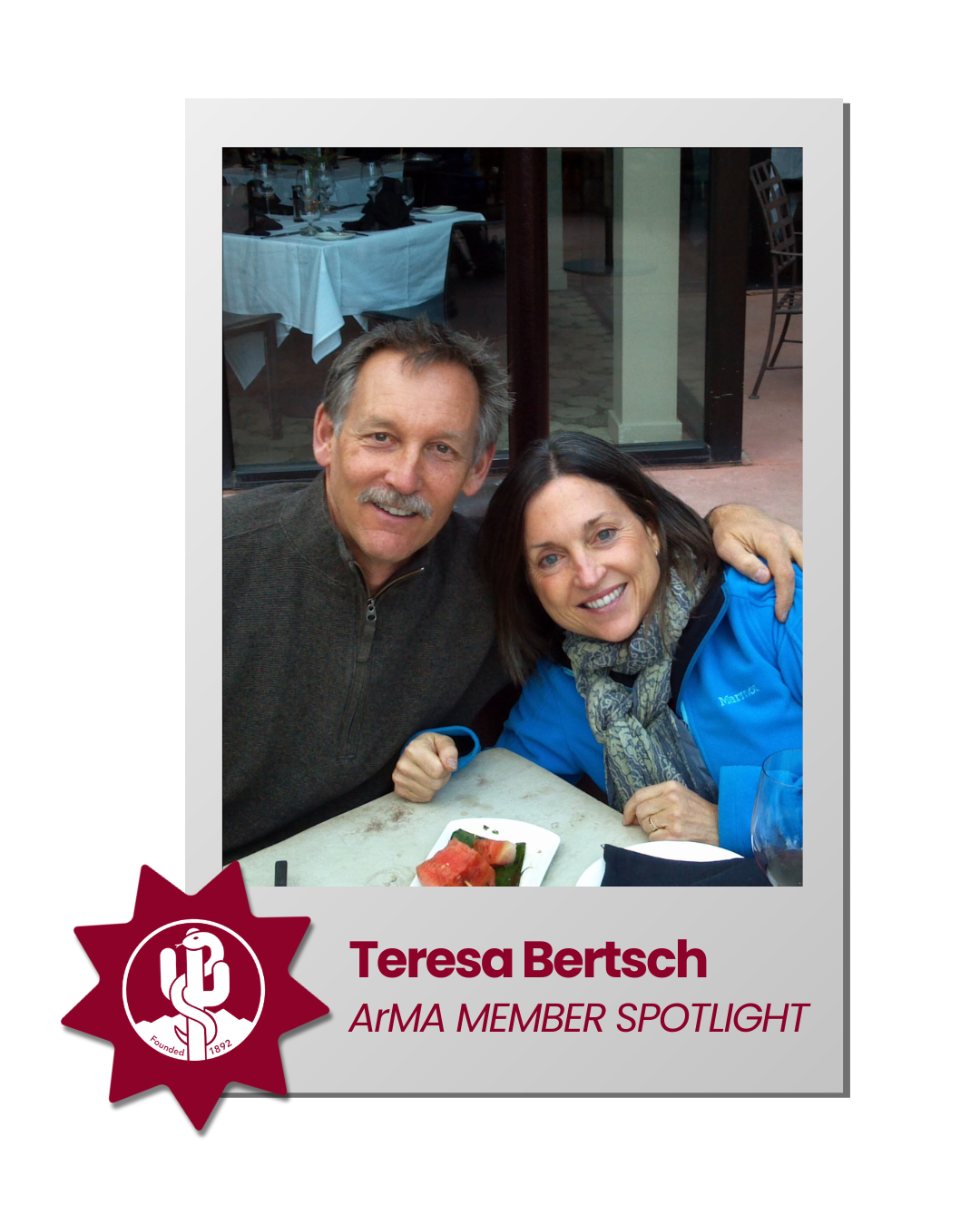
My husband almost died in a mountain bike accident when our children were young. I bought the only hot tub in Flagstaff that could be installed on the day he was discharged from the hospital. We have “jacuzzied” every night since then, looking up at the Flagstaff dark skies, no jets on so it’s quiet, reviewing the day.
You serve in multiple c-suite roles for The NARBHA Institute and its Northern Arizona Alliance for Behavioral Health Accountable Care Organization. What is your personal philosophy on leadership, and what do you enjoy most about leading others?
As a leader, I get the opportunity to make changes that go beyond what I can do in a one-on-one patient visit. I choose mission-driven systems that work well for the people who work in them, as well as for those who benefit from them. I view regulations and rules as solutions to problems that probably started with good intent but can still go awry. So, when something starts to feel like it’s stupid or has too much friction to follow correctly, I feel obligated to do what I can to achieve the intent, but in ways that don’t burn out healthcare workers or deny appropriate care.
I think leadership’s responsibility is to develop and drive smart, effective, compelling systems and initiatives that benefit as many as possible.
I mentor and coach medical students, residents, physicians and clinicians to not be afraid to take a leadership role even if they don’t think they have the expertise. Healthcare needs us! Too many of us have abdicated the “business” of medicine because we thought we weren’t experienced enough, or that it wasn’t as important as direct care. Research shows that healthcare organizations led by clinicians have better clinical and financial outcomes. I say, don’t wait to get an MBA or another credential! Join the Finance committee! Budgets are how an organization codifies its values into action. Physician leaders who participate in healthcare finance have considerable influence and impact. The other committee is Peer Review. Having a compassionate and realistic perspective on what it is like for a physician to have an adverse event may literally save that physician’s personal and professional life. And when a regulatory organization asks for feedback on a policy, give it. You might be the only one who did, and that can be very powerful.
I would say my philosophy on leadership is, believe you can make the world a better place, and then do it.
What personal or professional achievement are you most proud of?
Personally, I’m still married to my high school sweetheart who surprises and delights me constantly, as well as making it through having two children during medical school and residency.
Professionally, receiving the Arizona State Behavioral Health Leadership in Services Award for designing and delivering innovative behavioral health care systems and lifelong dedication to public service.
You received a master’s degree in linguistics from Stanford University. How has your background in the arts influenced the way you approach medicine and patient care?
I studied developmental linguistics with an emphasis in American Sign Language. My sister, who is 15 months younger than me, is deaf. Her experience of the world, especially when we were young, was so different than mine because of language, not intelligence. Language shapes our thinking, our relationships, our socioeconomic status and our perceptions of the world. Being her sister, sensitized me to the stigma that people with disabilities experience, especially hidden disabilities like deafness and psychiatric disorders.
Studying linguistics made me curious about the mind’s interface with society, behavior, emotions and actions. As a psychiatrist, you become very aware of the impact of your language and presence on a patient. Our minds are constantly making meaning about our experiences. What physician hasn’t been surprised by the patient who comes back and says how your one sentence made all the difference in their healing, or the stories about “medical curses” that derailed them or a family member? I teach everyone I can about the placebo effect and how physicians who display warmth and competence get the best results.
We are an active ingredient of healing too!
What would people be surprised to learn about you?
I lost a regional spelling bee in elementary school by misspelling “physician.” Decades later I still hesitate when I have to spell that word, which can be multiple times per day or week!
What was the biggest pivot point in your career?
Transitioning as CMO of a Medicaid managed care health plan to CMO of NARBHA’s affiliate, The Guidance Center, a community mental health center and psychiatric hospital. The five years I was at TGC were some of the most rewarding and stressful times for me personally and professionally because it spanned the entire pandemic with two EMR upgrades, major renovations to the psychiatric hospital and outpatient facilities, opening a new SMI BHRF and an integrated care clinic, two JCAHO accreditation surveys, and pandemic policy pandemonium.
You were recently recognized with ArMA’s Health & Fitness Award for, in part, your leadership of the Arizona’s Public Psychiatry Academy, a program to help early-career psychiatric practitioners navigate the challenges of Medicaid. As Medicaid funding is threatened, how has your approach to leading this program changed?
There is moral injury and resultant burnout in healthcare professionals when we are asked to treat patients we don’t feel competent enough to treat, or to ration or abandon care that we know is necessary. AHCCCS is complicated. Public health is complicated. Psychiatry is complicated. And rapid federal and state changes make it even more so!
We started the Arizona Public Psychiatry Academy to be a community of practice for those working in the public psychiatry system. Our goals are to support and train public psychiatry practitioners, especially early career, to understand and respond to the changes, to translate their academic knowledge into practice, and ultimately to thrive. We teach up-to-date information about healthcare finance, coding, credentialing, privileging, quality improvement, controlled substance and telehealth regulations, wellbeing, impostor phenomenon, time management, as well as psychiatric evaluation and treatments for all populations. We try to fill in the blanks and model clinical humility in a constantly changing environment.
It’s been incredibly rewarding, and we are going to be expanding to additional tracks in leadership, personal growth and ethics.
What prompted you to become involved in organized medicine?
I’ve been a Chief Medical Officer continuously for the past 30-ish years, first at Northern AZ RBHA (NARBHA), and then at our partner Medicaid Health Plan, and now at The NARBHA Foundation where I also am CMO of our two behavioral health ACOs, The Alliance and the Thrive Health Alliance. When our state was building a system for community mental health, I was able to impact many of the policies and programs at the state level because DBHS, ADHS and AHCCCS were very participatory. Now with our ACOs, we advocate for behavioral health agencies to be able to participate in value-based payment models to improve patient outcomes, collaborate not compete, support clinician wellbeing and continue NARBHA’s 58-year legacy of building and supporting public behavioral health care for rural, frontier and underserved populations.
What is the last book you read?
I read science fiction and fantasy and all the titles and plot lines blur together, especially on a Kindle! I find them entertaining because they are far removed from “real” life!
What is the best advice you've ever received?
From my mom, “if other people can do it, you can too.” This can be applied to childbirth, medical school, programming a new phone, running a marathon, etc.
Why is ArMA important to you?
I joined ArMA as a physician peer support during the pandemic when it started the Virtual Doctors’ Lounge. As part of the Wellbeing Collaborative of Arizona Health Professionals, I have been impressed with ArMA’s successful advocacy for licensure changes to remove mental health treatment attestations and its commitment to physician wellbeing.
Having a united voice is empowering.