ArMA Member Spotlight: James Nachbar, MD, Esq.
We're proud to introduce James Nachbar, MD, Esq., as ArMA's July Member Spotlight.
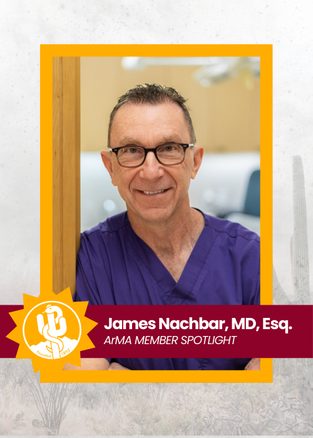
Dr. James Nachbar is a plastic surgeon practicing in Scottsdale, where he owns and operates Scottsdale Plastic Surgery.
Earlier this month, Dr. Nachbar was elected to the position of president-elect by his colleagues, meaning he will serve as the Arizona Medical Association's 135th president in 2026.
In his interview, Dr. Nachbar shares his thoughts on leading the House of Medicine as the landscape of healthcare changes rapidly, nodding to his priorities as ArMA's future president. He also talks about his early journey with medicine, what drew him into plastic surgery, and the uncle who inspired it all.
Dr. Nachbar's interview reveals someone deeply interested in understanding systems (whether its the legal system or computer coding) and helping people heal through confidence.
Read more about Dr. Nachbar's philosophy on enhancing patients' lives and his "just for fun" law degree below!
Organized medicine must continue to evolve as the landscape of healthcare changes. What do you see as the association’s largest area of opportunity or innovation?
Healthcare has changed dramatically—but so has society, especially in how we connect and access information. When I came to Arizona in 1995 to start my private practice, I joined all the local medical societies right away. That was just what everyone did—it was understood to be part of being a physician in the community. But that culture has shifted.
Today, many physicians—especially those employed by large healthcare systems—may not see the immediate value of ArMA membership. At the same time, a lot of physicians aren’t as aware as they should be of the legislative and regulatory challenges we face. That’s where ArMA has a huge opportunity: not just to continue advocating at the Capitol and with the Department of Health, but to better communicate the why and how of that work to all Arizona physicians.
We need to bring more physicians into the process, make our advocacy work more visible, and remind people that organized medicine is essential—perhaps now more than ever.
If we can meet doctors where they are, and show them the relevance of what ArMA is doing for their own practice, we can strengthen our community and our voice in a very meaningful way.
What is your top priority or strategic goal as ArMA’s president-elect?
My top priority as ArMA’s president-elect is to expand our membership. We need more physicians at the table, and that starts with helping them clearly see the value of being part of ArMA.
Too often, doctors don’t realize how much of what affects their day-to-day practice—reimbursement issues, scope-of-practice battles, regulatory burdens—is shaped at the state level. ArMA is working hard behind the scenes on these fronts, but if physicians don’t know that, or don’t feel represented, we risk losing both engagement and influence.
A big part of meeting this challenge is modernizing how we communicate. We have to meet physicians where they are—whether that’s through digital platforms, more targeted messaging, or simply making it easier to understand how ArMA’s work connects to their professional lives. The more accessible and relevant we can make our message, the more likely we are to bring new voices into the fold.
With my legal background and experience testifying at the legislature on health-related issues, I’ve seen firsthand how important it is for physicians to have a strong, informed voice in policymaking. Whether a physician is in solo practice, academia, or employed by a large system, we all benefit from unified advocacy—and that starts with building a larger, more engaged membership.
What initially drew you into plastic surgery? What made you stay?
What initially drew me into medicine was my uncle, an internal medicine physician who had fled from Egypt and rebuilt his life in Chicago. Our families spent many summers together during my childhood, and I was deeply inspired by his dedication and his ability to help people in such meaningful ways. That planted the seed for me to pursue medical school.
During my third year of medical school, I had hoped for an orthopedic surgery rotation but was instead assigned to plastic surgery. As it turns out, that was a fortunate twist. I was already drawn to surgery because of its potential to make lasting changes in a patient’s life—but plastic surgery offered something more: the precision, the creativity, and especially the intricacy of hand surgery really resonated with me.
After seven years on the faculty at the University of New Mexico, I came to Arizona and transitioned into private practice, where I now focus on cosmetic surgery. Some may view cosmetic procedures as superficial, but I’ve found the opposite to be true. There’s something incredibly powerful about being able to make a dramatic, positive impact on someone’s life—often in a single day. Whether it’s a breast augmentation or complex tissue tightening after major weight loss, I never take for granted the emotional thank-you that comes from someone who’s struggled with an issue for years.
While we as physicians are trained to save lives, I’ve always believed that it’s just as important to enhance them. Helping someone feel confident and whole—that’s healing, too.
What is your philosophy on effective leadership? How do you hold yourself to it?
My philosophy on leadership is rooted in the belief that everyone should have the opportunity to contribute their ideas. Diversity of opinion isn’t just valuable—it’s essential. The best decisions come from hearing different perspectives and really taking the time to consider an issue from all angles.
At the same time, I believe strongly about respecting everyone’s time. I’ve been in meetings where the leader spent most of the time sharing their own views, and while leadership does require direction, I think it’s far more effective to listen first and speak last. That way, you foster a culture where people feel heard and are more willing to engage.
I try to hold myself to that standard by encouraging open dialogue, staying open to feedback, and focusing discussions so that they’re productive—not just lengthy.
Ultimately, leadership is about bringing people together around a shared goal, and that only happens when everyone feels their voice matters.
You attended law school “for fun” and graduated second in your class. How has a law degree changed, aided, or informed your approach to medicine and patient care?
I’ve always been fascinated by how systems work—how all the components come together to create something functional and logical. That curiosity has driven me in medicine and surgery, in computer programming and software design, and ultimately, in my interest in the law. Believe it or not, in high school I used to ride my bike to the library and read statute books—though in retrospect, that might sound a little concerning!
When I started medical school, I even looked into combining it with a law degree, but at the time, there weren’t any formal programs to do that. Fast forward to 2014—one of my staff members mentioned she was going to re-take the LSAT, and I told her I would take it with her. I ended up scoring well, and I was offered a full scholarship to a part-time law program in Phoenix. With no real pressure—I still had my surgical career—I dove in. Honestly, law school was probably the most fun I’ve ever had.
What stood out to me most was how elegantly the pieces of legal reasoning fit together. Reading court opinions, I developed a deep respect for the way judges analyze issues—logically, thoroughly, and from multiple angles before reaching a conclusion. It reminded me of diagnosis and surgical planning, just applied to a different kind of system.
In terms of how it’s changed my approach to medicine, I’d say the biggest shift has been in how I view the legal system itself. Like many physicians, I used to find it intimidating—almost something to fear. But once I understood how it works, with all its checks, balances, and structure, that fear disappeared. Now, I’m much more comfortable navigating legal and regulatory aspects of medicine, and that confidence has made me a better advocate—for my patients and for my profession.
What prompted you to become involved in organized medicine?
I’ve been a member of medical societies almost continuously since finishing my residency in 1988, and I’ve participated in the Doctor of the Day program at the legislature since the 1990s. But for many years, I wasn’t especially involved beyond that.
What really prompted me to get more deeply involved came in 2017. I saw a communication from ArMA taking a position on a controversial issue before the U.S. Senate. I reached out to Chic Older, ArMA’s Executive Director at the time, and he explained that the position had been unanimously approved by the 11-member Executive Committee. That struck me—not because I necessarily disagreed, but because it suggested a lack of diversity in perspective. In a profession filled with smart, thoughtful individuals, I believe healthy debate and a range of views are essential.
The following year, I had just finished law school and passed the bar exam when I received an invitation to apply for a position on ArMA’s board. I felt I could offer something meaningful, so I applied and I joined the board in 2018.
Since then, my legal training has proved especially valuable. So much of ArMA’s most important work involves advocacy, shaping legislation, and even supporting litigation that protects patients and physicians alike. Being able to apply my understanding of legal systems, statutory interpretation, and the broader policy landscape has allowed me to contribute insights that I hope have helped the organization make more informed, strategic decisions.
Why is ArMA important to you?
For me, it really comes down to ArMA’s mission: to be the strongest advocate, ally, and resource for Arizona’s physicians and physicians-in-training. That mission resonates deeply. Together, we’re fostering the practice of medicine, championing patient care, and strengthening our communities—and that’s exactly the kind of work I want to be part of.
There are so many forces today that challenge the integrity of medical practice. One that concerns me greatly is the growing presence of lesser-trained non-physicians and naturopathic physicians presenting themselves as providing equivalent care. That not only puts patients at risk but also undermines the work and training of dedicated physicians. At the same time, I see how many of my colleagues are stressed and burned out. That weighs heavily on me.
What gives me hope is that I’ve seen the long-term impact ArMA can have. Over the years, ArMA has successfully advocated for safeguards against unfounded legal actions, and championed meaningful public health efforts—most recently during the COVID pandemic. These are not small wins; they’re lasting changes that benefit both patients and physicians.
That’s why ArMA is important to me. It’s about protecting the profession, improving care, and ensuring that physicians have a strong, unified voice in shaping the future of medicine in Arizona. I’m proud to be part of that mission.
What are your top 3 favorite movies or TV shows?
Two movies stand out for me, both for their deeper messages: Groundhog Day, with Bill Murray, is a favorite because of the powerful insight it offers—that our own actions, even the smallest ones, can profoundly shape the world around us. Watching the protagonist relive the same day over and over, slowly learning how to become a better person and make a positive impact given exactly the same situation each time, is both entertaining and surprisingly moving.
WarGames is another favorite. The way it explores a computer nearly triggering global destruction, only to be stopped by the realization that some games—like thermonuclear war—are unwinnable, has stuck with me. That lesson applies to a lot of life: sometimes the only way to win is not to play.
As for TV, my go-to is the nightly news—on multiple networks. I regularly watch CBS, ABC, and Fox. I like to hear different perspectives on the same issues. I’ve always believed that if you’re only watching content you already agree with, that might be entertaining—but it’s not how you learn anything new.
What is one message you would give your younger self?
That one’s easy:
Do not get married without a prenup! Without question, that was the most expensive mistake of my life.
But what I later came to understand—especially through law school—is that a good prenuptial agreement isn’t about planning for failure. It’s about clarity. It sets expectations from the beginning and can actually strengthen a relationship by ensuring that both people are entering it with transparency and mutual understanding.
It’s a lesson I learned the hard way, but one I now see as rooted in respect, not distrust.
What is the last book you read?
The last two books I read share a common theme: how to improve the quality of life as we and our patients age. One was Outlive: The Science & Art of Longevity by Peter Attia, MD, and the other was Super Agers: An Evidence-Based Approach to Longevity by Eric Topol, MD.
What stood out to me in both is the idea that, while modern medicine has given us remarkable tools, so much of our health still comes down to lifestyle. But when we combine healthy habits with science and thoughtful medical strategy, we can start focusing not just on living longer—but on living better.
Dr. Attia introduced the concept of the “centennial decathlon,” which I really connect with. It’s the idea of training today for the more-than-ten physical tasks we want to be able to do at age 100—things like hiking up a hill with a 20-pound backpack, lifting a suitcase into an overhead bin, or picking up a grandchild from the floor. That kind of practical, purpose-driven longevity really resonates with me.
I’m also fascinated by the idea of “longevity escape velocity”—the possibility that science may one day extend our healthspan, not just our lifespan, by more than 12 months every year. It’s an exciting frontier, and I hope to be around long enough to see us get there.
What is the best advice you've ever received?
The best advice I’ve ever received is something I wish I could credit to a specific person—but it stuck with me regardless:
Whenever you’re not sure which way to go, figure out what’s best for the patient, and do that.
It’s remarkably clarifying. Medicine can be complex, and we’re often balancing competing demands—clinical, legal, administrative. But when in doubt, that principle cuts through the noise. Focus on what’s best for the patient, and the right path usually becomes clear.
If you weren't practicing medicine, what would you be doing?
If I weren’t practicing medicine, I’d probably be doing one of the things I already enjoy in my spare time—developing software and system architecture, or practicing law. I’ve always been drawn to how systems work, whether they’re technical, legal, or biological.
The truth is, there are so many different paths a career can take. Either of those options might have been more financially lucrative, but I honestly can’t imagine they would be anywhere near as rewarding as medicine. There’s something deeply meaningful about the connection with patients and the ability to make a real difference in someone’s life.
Simply put—I love my job!
If you weren't practicing medicine, what would you be doing?
If I weren’t practicing medicine, I’d probably be doing one of the things I already enjoy in my spare time—developing software and system architecture, or practicing law. I’ve always been drawn to how systems work, whether they’re technical, legal, or biological.
The truth is, there are so many different paths a career can take. Either of those options might have been more financially lucrative, but I honestly can’t imagine they would be anywhere near as rewarding as medicine. There’s something deeply meaningful about the connection with patients and the ability to make a real difference in someone’s life.
Simply put—I love my job!
What do you like best about living in Arizona?
What I like best about living in Arizona? The summer heat—yes, really—and the people.
There’s something I genuinely enjoy about Arizona summers. When the temperatures rise, the visitors clear out, the big events pause, traffic thins, and suddenly everything feels a bit more peaceful and open. It’s like the state takes a collective breath.
And the people here are truly wonderful—both pleasant and intelligent. I grew up in the Midwest and on the East Coast, and I still go back to visit family. Every time I do, I’m reminded of how different it feels. For one thing, everyone’s honking their horn all the time back east! Arizona just has a calmer, friendlier energy—and I really appreciate that.
What would people be surprised to learn about you?
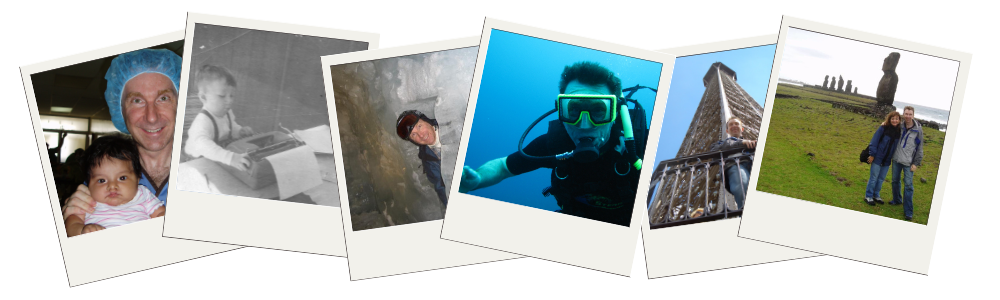
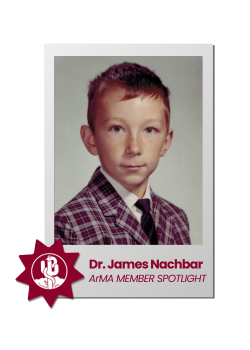
People might be surprised to learn that when I was in high school in Connecticut back in 1969, our school got one of the earliest computers—a PDP-8L. I was completely fascinated. It had no monitor, no disk of any kind (not even a floppy), no ROM, and just 4K of RAM. Input and output came through a typewriter-like terminal. To boot it up, you had to manually enter around 200 commands using physical switches on the front panel—just to get it ready to read the operating system from a paper tape punched with holes.
I was so eager to learn how it worked and how to program it that I started leaving the computer room window unlocked so I could sneak back in over the weekends and spend more time with it.
(To be clear—kids, don’t try that today! It was a different time.)
Looking back, it reflects the curiosity that has driven me ever since. Whether it’s computing, medicine, or law, I’ve always been drawn to understanding how complex systems work—and how to make them better.