
Say Hello to Ajay Bhatnagar, MD
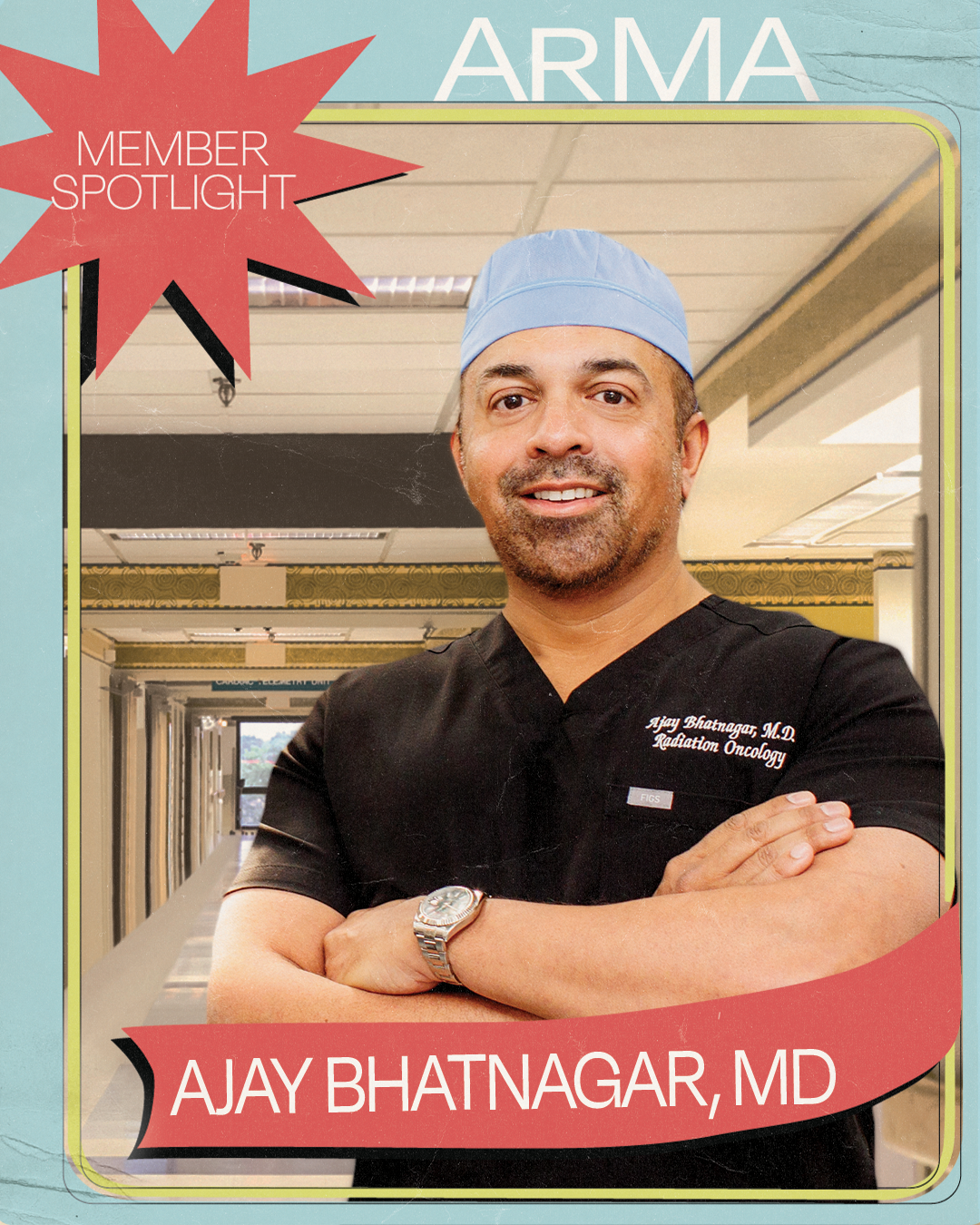
We are pleased and excited to introduce you to our monthly Member Spotlight for May, Ajay Bhatnagar, MD. Dr. Bhatnagar is a radiation oncologist and the founder of the Prostate Cancer Institute of Arizona. Additionally, Dr. Bhatnagar serves as a Rural Director on ArMA's board.
In his interview with our Member Spotlight, Dr. Bhatnagar shares up-close and personal insight into starting a practice from scratch, a story highlighted on AZ News 7. Through trials and tribulations, the theme of "never giving up" umbrellas an inspiring account of pursuing avenues that lead to physician fulfillment and quality patient care. Learn all about Dr. Bhatnagar's journey with medicine below!
What has been the biggest change in your career?
The biggest change in my career was last year when I left the cancer center in Casa Grande, AZ, where I have been since 2007, to start my own practice. Multiple reasons led to this decision, but I definitely was not planning on this significant change. However, I am so glad I had the courage and determination to start my own practice, which is not easy in the current health care environment where most doctors are employed, especially in my specialty. Though to start your own practice in this current period, you really need to research and figure out how to make it work. In my situation, I knew that I had be innovative and unique and find a niche where I at least have a chance to be successful. I also knew I had to figure out a way to have minimal capital investment, which is quite contrary in my area, where building cancer centers can cost tens of millions to hundreds of millions of dollars. Fortunately, I had always been performing a procedure for prostate cancer called Low Dose Rate (LDR) brachytherapy (aka prostate seed implant) which basically has gone away due to the more lucrative (higher reimbursing) treatments available for localized prostate cancer. However, this treatment has a valid role in prostate cancer treatment; therefore, I decided to start a practice exclusively focusing on offering this treatment to men in the Phoenix metro region, which is the only practice in AZ of its kind.
Can you explain how you got your practice started?
I know it can be daunting and overwhelming to do this as a physician, so I decided to hire a consulting company to help me start my practice which was another great decision that I am very glad that I made since no matter how smart you are- you cannot do everything yourself! So the consulting company helped me get started with all the details from start to finish, such as helping me choose the right EMR for my practice, helping me hire my employees, hire a marketing firm to get branding and a website. And then the most important part of starting a medical practice is getting credentialled with the insurance companies. While everything else took 6 months
to get opened, the insurance credentialing still lingered and is still not completely done, but I am almost there, making it a year-long process.
What would you tell other members who are considering starting their own practice?
YOU CAN DO IT! Once you are fully committed and determined to make it happen, it will happen. You need to be patient, which can be challenging as physicians since we're engrained to be constantly busy, but it takes time to establish a practice, and nothing is on your timeline. And don't worry about the haters and doubters, as there will always be people wanting you to fail but do your best to ignore them and stay focused on your vision and the belief that you can do this! I strongly believe the dramatic increase in physician burnout is due to our lack of control, but it doesn't have to be that way.
So, it's time we take back control and start running our own practices. I would welcome any ArMA member considering taking this bold step to contact me, as we need to support one another. ArMA's
Private Practice Physicians Section was created for this reason!
What inspires you?
I am inspired by helping people. Specifically, as a radiation oncologist, I strive to utilize my expertise and experience to achieve the best outcomes for my patients.
What is one message you would give to your 18-year-old self?
Anything is possible as long as you're committed to making it happen. Nothing is impossible.

Why is ArMA important to you?
ArMA is important to me for multiple reasons, but I'll stick to these two. First, I am convinced that no other organization better represents me and my physician colleagues at the state level than ArMA. Second, ArMA (which includes the members and the staff) has been an excellent support group for me to help me with my career during the past decade, including this most recent decision to start my own practice. I am extremely appreciative of ArMA's support this past year during this career transition.