
Historical Timeline & Milestones
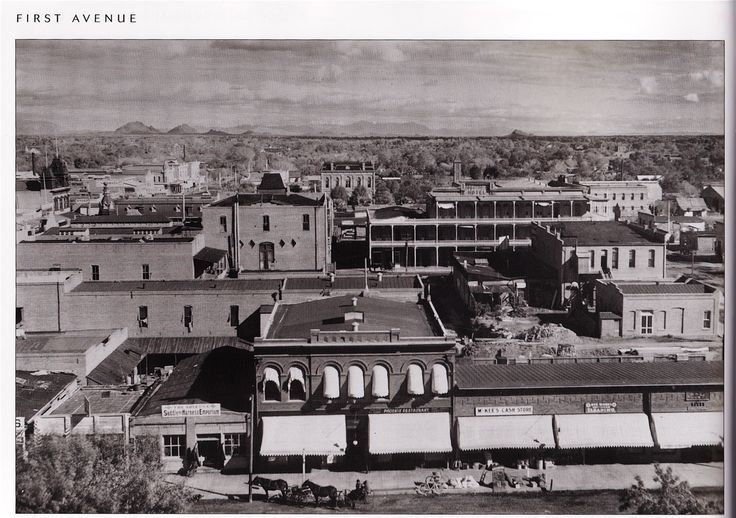
1892
Founding of Arizona Medical Association (ArMA). There are 9 members. Founding president – J.A. Miller. Born on May 5, 1846 in Makin County, Missouri, Dr. Miller was instrumental in organizing the medical profession in Arizona. He began with the Yavapai County Medical Society, then the Maricopa County Medical Society, then the Arizona Medical Association, all of which he was the first president.
1898
Ancil Martin brought the first x-ray apparatus to the state of Arizona. Practicing in Arizona from 1892 to 1926, Dr. Martin had several firsts. He was the first ophthalmologist to locate and practice in Arizona. He was the first doctor to report cases of “rabbit septicemia,” later to be called tularemia. Tularemia is an infectious disease of wild animals, such as rabbits and squirrels, that is occasionally transmitted to humans. Dr. Martin later was given the name “father of tularemia.” Dr. Martin was president of ArMA in 1894.
1902
Founding ArMA President Dr. J.A. Miller dies. Membership climbs to over 100 physicians for the first time. Eighty-five percent of all Arizona physicians are members of the association.
1904
ArMA member, Clarence E. Yount Sr., MD, does extensive research on rabies and screwworm and reports his observations in professional journals and before meetings of the Arizona Medical Association. In 1907, with Dr. H.D. Thomason of Fort Whipple, Dr. Yount gave the first spinal anesthesia to a patient in Arizona. After serving in World War I, Dr. Yount was elected president of ArMA in 1919.
1905
The Arizona Medical Association recommended, based on a request from the American Medical Association, supervision and examination of school children’s eyes, ears, nose and throat annually and to include children above the first grade.
1912
Arizona Medical Journal published. This was the first journal produced exclusively for the state of Arizona. Previously, ArMA was associated with journal collaborations involving several state medical associations. This was a subscription journal carrying advertisements.
1916
The Arizona Medical Journal is discontinued, and Southwestern Medicine — a collaboration between Arizona, New Mexico, and the Southwestern Medical and Surgical Association — is launched.
1917
The Medical Defense Committee of ArMA was created to help physicians being sued.
1923
Construction was completed on the Arizona Deaconess Hospital. The cost was $350,000, which included the building, grounds, and equipment. The Methodist Episcopal Church was the sponsor. The hospital was a very modern institution for the time period, equipped throughout with the best surgical and medical equipment. There was room for 105 patients. The hospital was renamed the Good Samaritan Medical Center.
In 1923, Dr. Carlos Montezuma, born Wassaja, an Apache, died at the age of 56. Dr. Montezuma was the first male Native American to become a Medical Doctor, receiving his degree from Chicago Medical College in 1889. After serving as a physician with the Bureau of Indian Affairs, Dr. Montezuma began a lifelong battle to free his fellow Native Americans from the Bureau and reservation system. He is buried at Fort McDowell.
1927
The Tucson Citizen was the first daily newspaper in the U.S. to record the ultraviolet ray intensity of the preceding day in its weather report. The readings were from the Desert Sanatorium, near Tucson, which was one of only three places in the U.S. equipped with a radiometer.
1933
A resolution was proposed for all medical societies to petition the American Medical Association to decrease the number of medical graduates. (Depression years – there were too many doctors and not enough money). Constitutional initiative giving chiropractors a legal right to practice medicine and surgery as a constitutional provision was defeated. The first report of the Women’s Auxiliary of ArMA is printed in Southwestern Medicine, an official publication of ArMA.
1936
Jesse D. Hamer was one of the youngest presidents of ArMA. Dr. Hamer was only 38 when he served as president of ArMA in 1936. There have been fewer than ten ArMA presidents under the age of 40. He was a long-standing delegate to the American Medical Association, and finished his career as vice-president of the AMA.
1941
The Pinal County Medical Society was formally organized.
1942
One-hundred and five ArMA physicians serve in the Army and Navy during World War II. This was almost 10% of the 1233 total physicians in the state.
1944
Arizona Medicine debuted. Frank J. Milloy was the first editor-in-chief. Dr. Milloy obtained and administered the first penicillin used in the Valley. This was during World War II when penicillin was restricted to use by the armed forces. Dr. Milloy is also given credit for introducing blood transfusion work into Arizona. He was active in the Arizona Medical Association, and in 1942 was elected secretary. In 1944 he, along with Doctors J.D. Hamer and D.F. Harbridge, began publication of Arizona Medicine. A few years later, an attempt was made to combine Arizona Medicine with Southwest Medicine, and Dr. Milloy worked hard to prevent this from happening.
1945
“Medical Quarter Hour” – a series of radio programs entitled “American Medicine Serves the World at War” — ran January through February in Phoenix on KTAR.
1946
ArMA House of Delegates authorized and set up the Arizona Blue Shield Medical Service Plan. ArMA provided the funds to assure a sound administration and the prompt payment of fees to participating physicians.
1952
“The MD’s Notebook” was the first radio presentation of its kind in the U.S. It was a joint venture with ArMA and the Maricopa County Medical Society in which interviews with physicians and surgeons were broadcast across the state.
1958
The artificial kidney made its first appearance in Arizona.
1963
Arizona Board of Regents appointed the first dean to the University of Arizona College of Medicine.
1964
After two and a half years of research, a team of heart surgeons in Tucson developed a pump that allowed short-term replacement of the heart during surgery. This discovery was significant as it took science one step closer to replacing faulty hearts with artificial ones.
1970
ArMA's new central state headquarters was completed.
1975
ArMA launches the “Physician for a Day” program at the AZ Capitol, where physicians volunteer to spend a day at the state legislature to provide medical support, learn how policy-making is accomplished, and meet their own senators and representatives.
1980
ArMA member Dan Cloud, MD, was elected American Medical Association president.
1985
Arizona Medicine ceased publication in the current form and merged with the Western Journal of Medicine to create a special Arizona edition. A specific socioeconomic type of journal named Arizona Medicine was to be developed.
1990
Arizona Medicine separated from the Western Journal of Medicine to be published on its own. This is the current association publication, except that it is currently named AZMedicine.
1992
Jacqueline A. Chadwick became the first woman president of the Arizona Medical Association. Dr. Chadwick graduated with a degree in zoology from Arizona State University, and received her MD from the University of Arizona College of Medicine. In 1992, Dr. Chadwick was appointed Associate Dean for Phoenix Programs for the University of Arizona College of Medicine to act as a liaison between the College of Medicine and the Phoenix community. She currently serves as Vice Dean for Academic Affairs at the University of Arizona College of Medicine-Phoenix.
Marilyn K. Laughead, MD, became the second woman president of ArMA.
1997
ArMA's first website was created and published in June. ArMA joined the growing internet, allowing members and non-members alike to access information about the association.
2000
HB2600, Managed Care Reform Act, passed in April. This was a big step in patient advocacy, requiring accountability from insurers.
2004
ArMA launched “Will Care Be There,” a campaign seeking aggressive tort reform. A rally in Phoenix was co-sponsored by the Maricopa County Medical Society, and another in Tucson was co-sponsored by the Pima County Medical Society.
2006
ArMA’s tort reform efforts were rewarded with the passage of an expert witness bill, the affidavit of merit statute, “I’m Sorry” legislation, and changes to the state’s vulnerable adults statutes, which protected more than 90 percent of physicians from litigation under this statute with its draconian penalties.
2009
In 2008 and 2009, ArMA served on an AMICUS process in a case that challenged the constitutionality of the expert witness statute, ARS 12-2604. The Arizona Supreme Court held that ARS 12-2604 was substantive and did not violate the separation of powers doctrine, effectively reinstating the expert witness qualifications statute.
2020
The COVID-19 pandemic brings the world to a stop and pushes hospitals to the brink. ArMA President Dr. Ross Goldberg provides guidance to the public in over 100 news and radio interviews across the state and country at large. ArMA distributes free PPE to local physician practices and hosts regular town halls to disseminate rapidly evolving information about the virus.
2022
ArMA secures state funding to create the Healthy Arizona Workforce Coalition (HAWC). The coalition, which is composed of physicians, nurses, healthcare leaders, and educators, focuses on identifying and implementing short-, mid-, and long-term solutions to the healthcare staffing shortage.
2023
Through funding allocated by the Arizona State Legislature and administered by the Arizona Department of Health Services, ArMA launches the Preceptorship Grant Program. The program awards grants to voluntary allopathic physician preceptors of local medical students to support medical education in Arizona. In total, the program distributes more than $300,000 in unrestricted funds.
2024
In alignment with our member-adopted policies, ArMA lobbies the Arizona State Legislature to repeal an antiquated 1864 ban on pregnancy terminations after the Arizona Supreme Court rules it is enforceable following the overturning of Roe v. Wade. The ruling catches national attention and becomes a focal point of discussions on reproductive health. The ban would have criminalized physicians for providing evidence-based medical care. ArMA mobilizes hundreds of physicians in sending more than 70,000 letters to lawmakers and officials. After months of tense political debates, a repeal is passed and signed by Governor Katie Hobbs.
2025
ArMA, alongside several co-champions, successfully passed legislation to prohibit Artificial Intelligence from making the final determination on medical claims submitted to commercial health insurers. The legislation, which went into effect on July 1, 2026, was only the second of its kind in the nation and set a precedent for the regulation of AI in healthcare.
ArMA celebrated the 50th year of its cornerstone program, Doctor of the Day, which brings more than 60 physicians and physicians-in-training to the State Capitol every year. The program continues to be an invaluable component of physician advocacy.