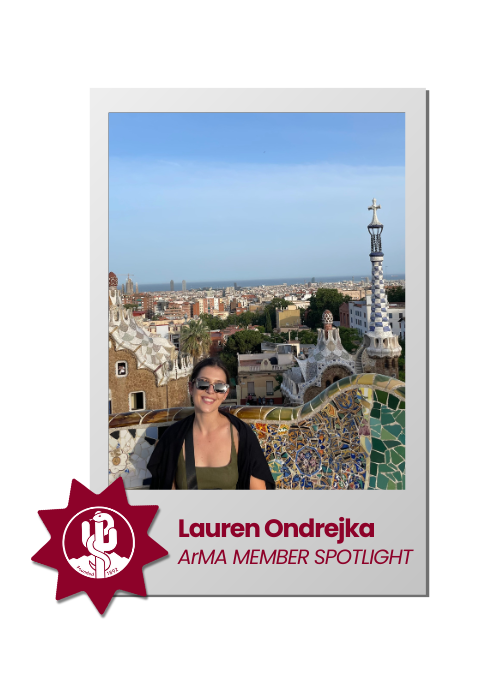
Member Spotlight: Lauren Ondrejka
We're proud to introduce Lauren Ondrejka as ArMA's November Member Spotlight.
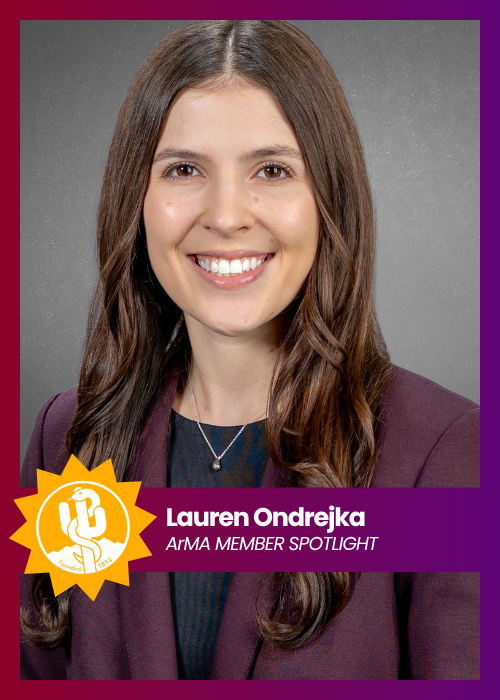
Lauren is a fourth-year medical student at the University of Arizona College of Medicine – Phoenix., where she has distinguished herself through academic excellence and a dedication to leadership, advocacy, and research.
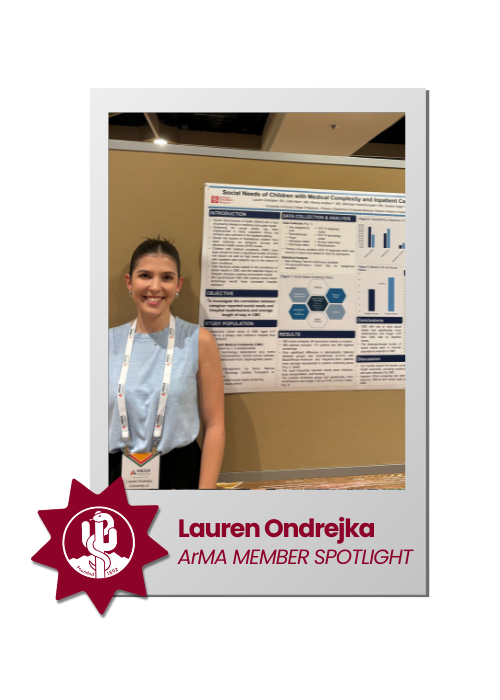
Last month, she was one of three students awarded an academic, merit-based scholarship by the Mutual Insurance Company of Arizona. And, her research — a longitudinal scholarly project examining the social needs of children with medical complexity and inpatient care utilization — was presented at ArMA's 2024 Annual Meeting and the Pediatrics Hospital Medicine's 2024 Annual Meeting, with the findings recently published in Hospital Pediatrics.
In her interview, Lauren reflects on her journey through medicine thus far, from medical scribe to physician-in-training, and shares how she has come to understand medicine as extending far beyond diagnosis and treatment. As she prepares to complete a residency program in pediatrics, she is already demonstrating excellence in medicine, which impact the lives of our youngest patients for years to come.
Read more about Lauren and her journey as a medical student below!
What drew you to pursuing a career in medicine and, more specifically, pediatrics?
"I was initially drawn to medicine when I discovered my fascination with physiology in high school. Seeking a career that could combine this interest with continual personal growth, positive community impact, and human connection, I found my way to medical school. Pediatrics was a natural first interest given my experiences working with children as a camp counselor and hospital volunteer. Once I began my clinical rotations, I knew pediatrics was the right place for me. I was inspired by the opportunity to impact patients early on in life and enjoyed the creative, collaborative environment."
You recently received an academic merit-based scholarship from the Mutual Insurance Company of Arizona (MICA) Medical Foundation Board of Trustees, which included meeting members of the board and having breakfast with University of Arizona College of Medicine – Phoenix Dean, Dr. Fred Wondisford. What was that experience like, and what does this honor mean for you as one of only three students selected?
"Receiving the MICA Foundation scholarship was both an honor and surprise. I am incredibly grateful for the financial support and acknowledgment of my hard work and dedication throughout medical school. The breakfast with Dean Wondisford and the MICA team was a wonderful way to celebrate and learn more about their perspectives on the future of medical training and healthcare in Arizona."
You're in your final year of medical school and preparing for residency. Looking back at your time in medical school, what is the greatest thing you've learned about yourself and the practice of medicine?
"I have learned I am far more capable and resilient than I ever imagined. The last three years have gone by so quickly. It is absolutely true when they say, 'the days and weeks are long, but the years are short.' I am very proud of all I have been able to accomplish and explore in addition to my coursework and clinical rotations. Looking back on my first day of medical school, I did not realize I would eventually leave as an advocate, educator, researcher, and author as well as a physician.
That is the greatest thing I have learned about the practice of medicine, the invaluable intangibles. Being a physician is much more than investigation, diagnosis, and treatment. We have the great privilege to connect with people and try our best to understand them and walk beside them through their unique journeys in health and illness. It comes with the equally important responsibility to contribute to the evolution of this field, whether through research, advocacy, or education."
You worked as a medical scribe prior to beginning medical school. How has that experience aided you in your education? How did it influence how you see medicine?
"Working as a medical scribe was incredibly helpful in allowing me to envision what daily life could look like as a physician in a number of different specialties and practice settings. I always recommend it to premedical students. I came into medical school already understanding the structure of documentation, the basics behind billing and coding, and how to navigate multiple electronic health records. This helped immensely in our Doctoring course and in my clinical rotations. Working in this role allowed me to understand the realities of modern-day medicine and better prepared me to function effectively within it."
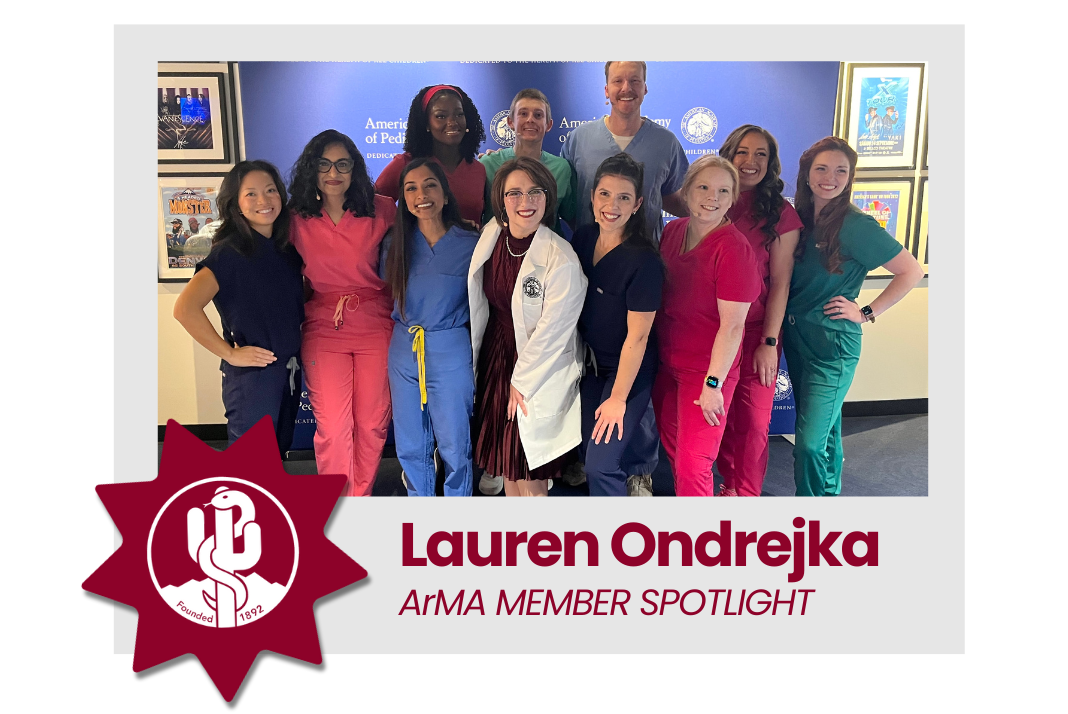
What makes you most excited about the next steps in your career?
"I am most excited to focus on my chosen specialty of pediatrics in this next chapter. I feel lucky to have participated in multiple pediatric rotations in medical school and look forward to dedicating all my training and educational time to working with and caring for children."
What prompted you to become involved in organized medicine?
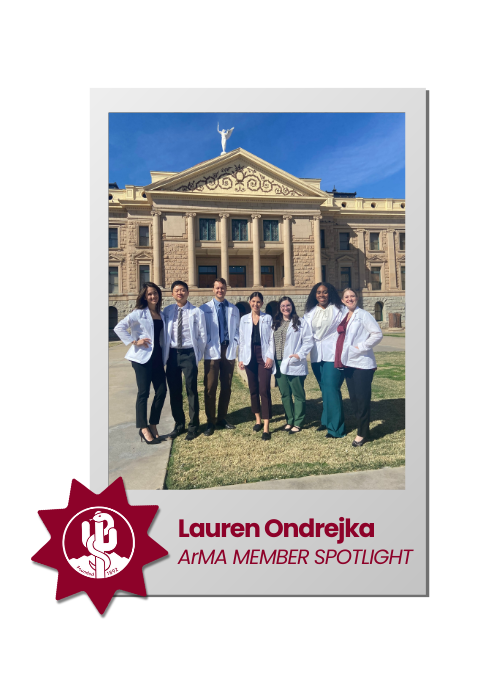
"I got involved in organized medicine to better understand how policy and advocacy shape the care we provide. My first exposure came through my role as a chapter leader for Medical Students For Choice (MSFC), where I saw how legislation directly impacts patient care. That experience sparked my interest in working with organizations like ArMA to advocate for change at the state level, and to ensure physicians' voices are heard in shaping healthcare policy."
Why is ArMA important to you?
"ArMA is important to me because it allows physicians and trainees to come together to advocate for our patients and our profession. ArMA's work at the state level ensures that lawmakers hear the perspectives of those on the front lines of care delivery. I'm grateful to be part of that conversation and learn how to get involved in legislative advocacy early in my career."
What song have you had on repeat lately?
"Anything from Olivia Dean's new album The Art of Loving."
Where is your favorite place to grab food in Arizona?
"Glai Baan, First & Last, Mensho Ramen."
What personal or professional achievement are you most proud of?
"The professional achievement I am most proud of is my longitudinal scholarly project entitled 'Social Needs of Children With Medical Complexity and Inpatient Care Utilization.' Our findings demonstrate children with medical complexity who have unmet social needs have significantly greater readmissions and longer length of stay in the hospital. It was an honor to present our work locally at the ArMA Annual Meeting and nationally at the Pediatrics Hospital Medicine Annual Meeting in 2024. Our manuscript was just recently published in Hospital Pediatrics along with a commentary piece."
What is the last book you read?
"Remarkably Bright Creatures by Shelby Van Pelt."
How do you unwind after a stressful day?
"Reality TV – anything from Dancing With The Stars to The Real Housewives."
What is something on your bucket list you hope to cross-off soon?
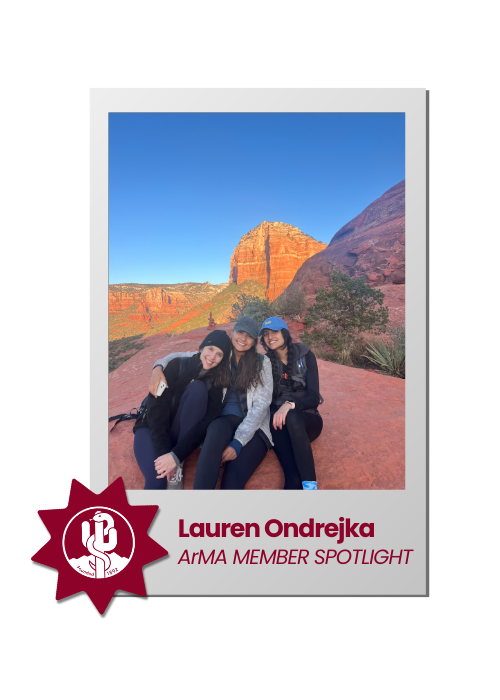
"I've loved travelling to new places with my classmates during medical school. Hoping Greece is next after graduation!"