Meet Dr. Frederick Kogan
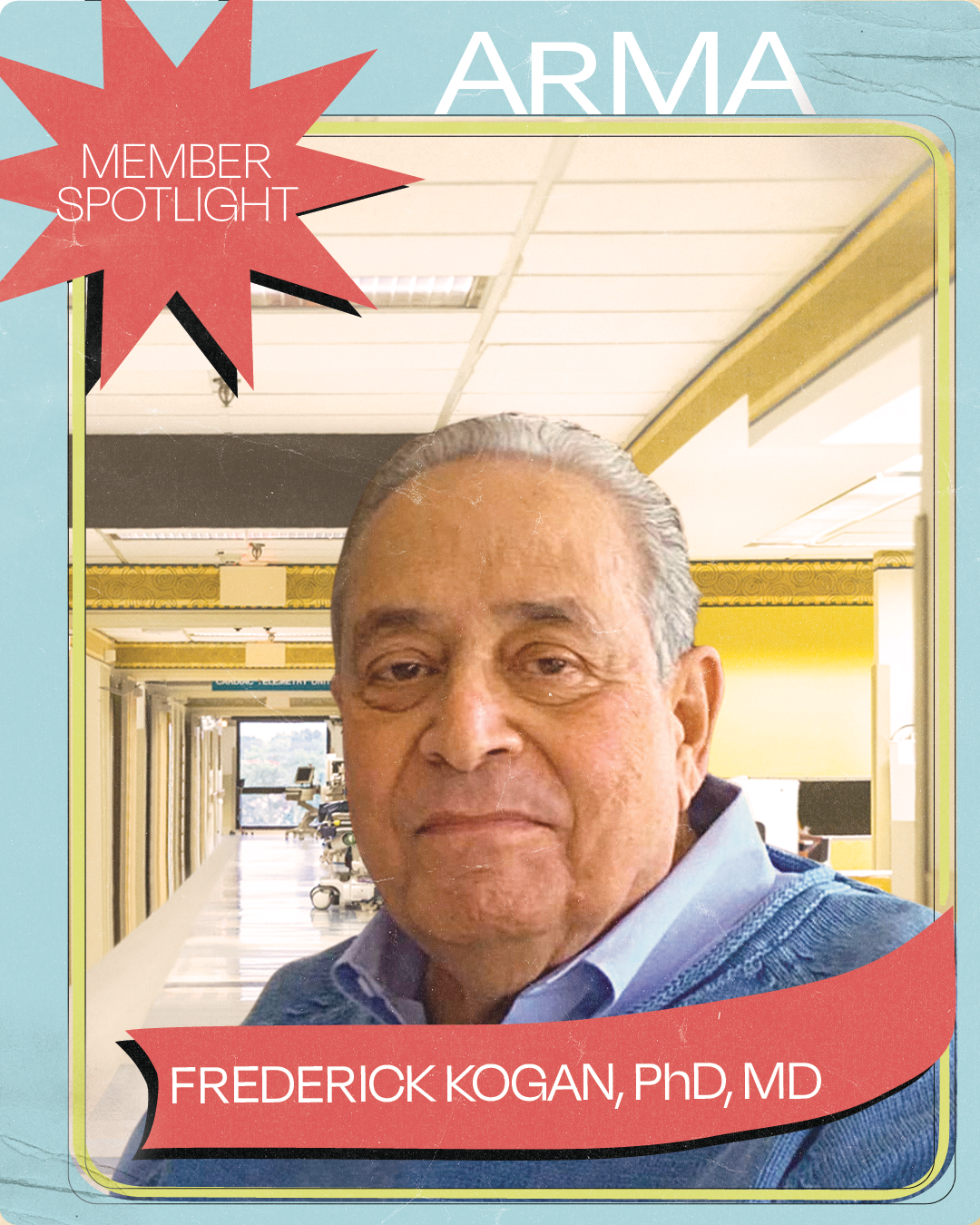
We are excited and honored to introduce you to our member in the spotlight this month, Frederick J. Kogan, PhD, MD. A long-time ArMA member, Dr. Kogan has practiced medicine for over 40 years, specializing in gastroenterology. In addition to caring for patients, he has played a very active role in the ArMA community by serving on both the Public Health Committee and the Legislative and Governmental Affairs Committee.
In his interview for our Member Spotlight, Dr. Kogan shares wisdom not only from his experience practicing medicine but from his experience living life. From piloting an F-4B in Vietnam to earning a PhD and MD at the University of Utah College of Pharmacy and Medicine, Dr. Kogan believes his greatest inspiration comes from the people around him. You'll be inspired by his passion for learning new things, maybe even guitar.
Read all about Dr. Kogan's unique journey with medicine in the interview below!
What is one message you would give to your 18-year-old self?
I would go further back to myself at 14 years old, smack the back of my head (hard!), and tell myself to stop screwing around. I would tell myself to do more than just sit in class… To open my eyes to books that open to the world, learn to enjoy math, and learn to enjoy learning.
What would people be surprised to learn about you?
I started college at 16 years of age on a football scholarship. I entered the Navy just before my 20th birthday to avoid the draft. I finished flight school at Pensacola, Corpus Cristi, and Miramar Naval Air Station and piloted an F-4B during the Vietnam War. When I returned to the states, I earned a PhD in Pharmacology and an MD at the University of Utah College of Pharmacy and Medicine.
If you weren't a physician, what would you be up to right now?
As I was not a graduate of the Naval Academy or an ROTC program, I had little to no possible advancement in the military. I couldn't see myself tied down to a job in the airline industry, and if I was not going to do graduate work in science or medicine, I would have been a teacher in middle or high school. Because I was such a screwball, I would hope to interest kids in loving to learn and continue with their education.
What inspires you?
PEOPLE! I always learn something from acquaintances, friends, and patients. It doesn't have to be related to medicine. It can be current events or different cultures; it can be from books, movies, or articles from various magazines. You learn to keep an open mind even when disagreeing with what you are being told. You need to research what you hear, don't take anything without fact-checking.
What do you enjoy doing in your spare time?
I'm old school. Medicine is all-consuming, and I never developed hobbies. Sure, I attended the kids’ school events, and we went on vacations and traveled. But it wasn't until I listened to the next generation of physicians that I learned about life balance. I tried retiring about 6 years ago but figured my wife (of now 53 years) would kill me if I stayed home any longer, so I went back to work, but at a slower pace, and learned to say “NO.” I've invested in Wondrium, formally known as The Great Courses, studying American History, European History, and anything other than medicine or biological science. Maybe I will pick up the guitar...
Why is ArMA important to you and your colleagues?
ArMA is important for our patients’ well-being and safety. Over my years in practice, I have seen a change in the scope of practice of our associates, including Advanced Practice Nurses, Physician Assistants, Psychologists, and others. There are pushes for legislation that has the potential to harm our patients, including measures allowing for independent practice and giving Psychologists the right to prescribe medication to their patients. These potential changes in the scope of practice could cause significant harm to our patients. We must work together to prevent this danger to our patients. This is best accomplished through our state association, the Arizona Medical Association.