ArMA Member Spotlight: Richard J. Gray, MD, FACS!
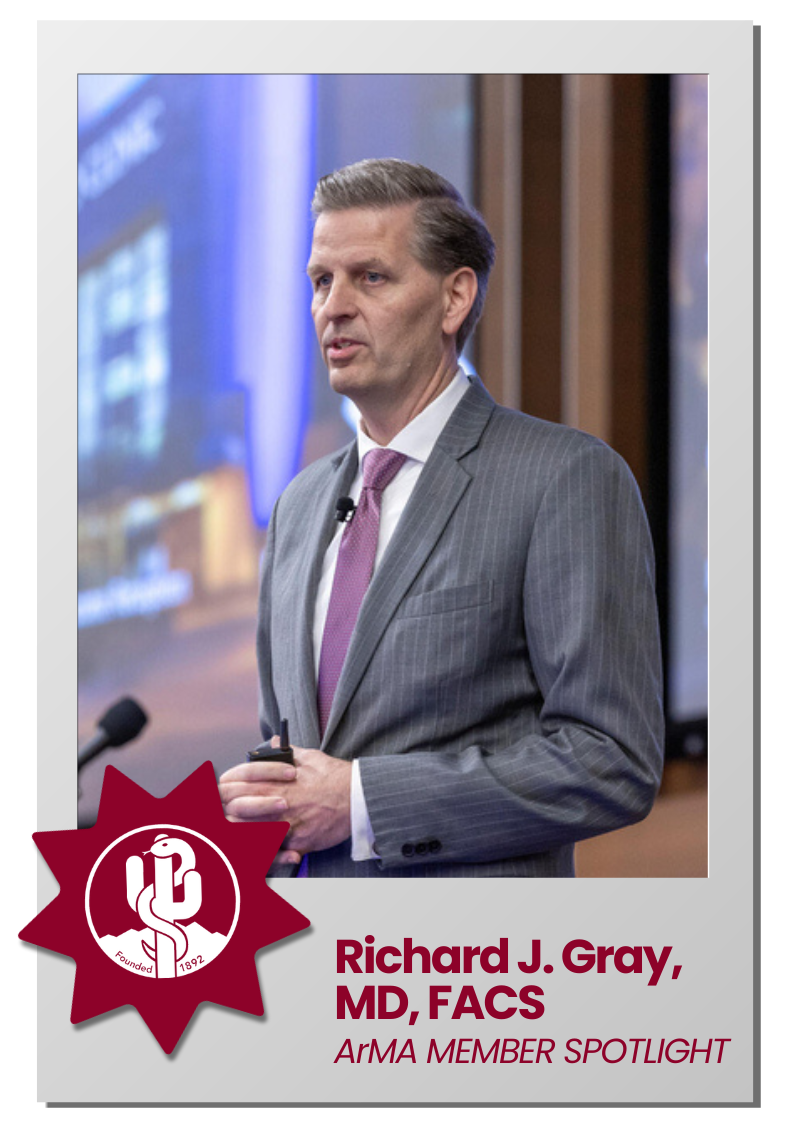
We're proud to introduce Richard J. Gray, MD, FACS, as ArMA's September Member Spotlight!
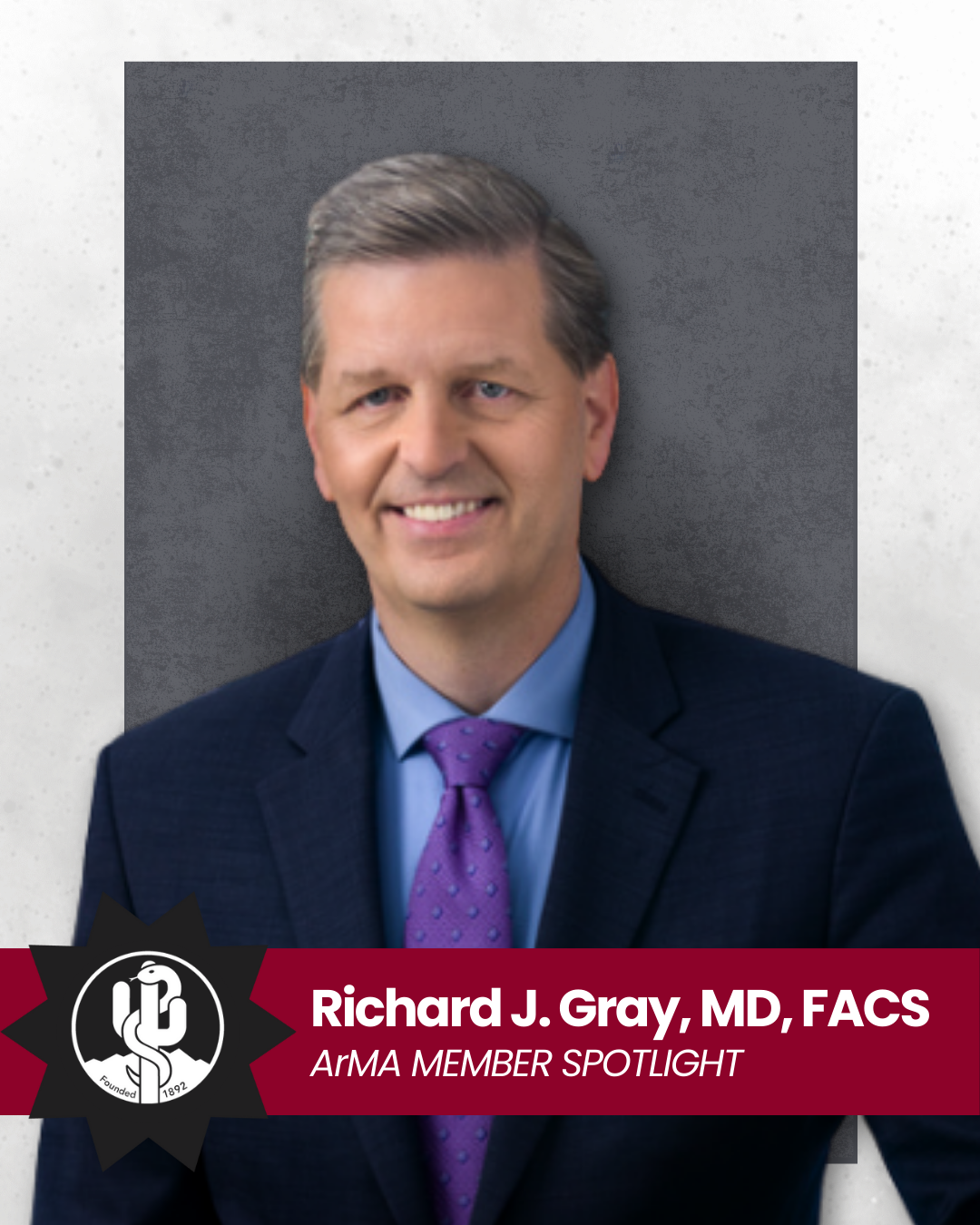
Dr. Gray currently serves as the CEO of Mayo Clinic in Arizona. He received his medical degree from Michigan State University before pursuing a fellowship for surgical oncology at the H. Lee Moffitt Cancer Center in Florida.
In 2001, Dr. Gray joined Mayo Clinic's faculty, and he has been an integral member ever since. His patient-centered approach to care delivery earned him a spot in the U.S. News and World Report's Top 1% of Surgeons. Dr. Gray became an ArMA member in 1995 and is a strong supporter of organized medicine.
Which aspect of your role as Mayo Clinic in Arizona's CEO are you most passionate about? What about it invigorates you?
"As CEO, my greatest passion lies in ensuring we live up to our primary value: the needs of the patient come first. This commitment drives everything we do—from pioneering new cures and leveraging data to generate actionable insights, to transforming our approach with advanced technologies like AI.
I am invigorated by the creativity and dedication of our employees, who bring novel approaches and groundbreaking discoveries at the forefront of patient care. Witnessing our teams deliver answers and cures that patients cannot find elsewhere is profoundly rewarding.
Moreover, working at this exceptional institution, which has a rich history spanning 160 years, adds a unique sense of fulfillment. Being part of a legacy of excellence and innovation, and contributing to a tradition of advancing medical care, is a privilege that continually inspires and motivates me. "
Which of Mayo Clinic in Arizona’s recent achievements are you most proud of?
On a daily basis, I am most proud of the outstanding outcomes our teams achieve for our patients. Independent organizations’ recognitions affirming this excellence are particularly meaningful. For instance, Vizient's ranking of Mayo Clinic in Arizona as having the best cancer patient quality and outcomes in the U.S. last year was a significant achievement, and our consistent top performance across rankings from U.S. News, HCAHPS, Leapfrog, and CMS Stars, which consistently place us at the highest percentile in the nation, underscores our commitment to exceptional patient care.
I’m also proud of our Arizona. Bold. Forward. strategic investments over the past five years, which have significantly strengthened our foundational areas of practice, education, and research. We doubled the size of our Phoenix campus to support rapid growth in the Southwest, adding 99 new inpatient beds, two additional floors of outpatient space, and a 35-bed observation unit. Additionally, we increased our research space by 40% with our newly opened Integrated Education and Research Building. Together, these enhancements enable us to Cure, Connect, and Transform healthcare to serve more patients.
I’m equally proud of achievements that point to innovation and a future that will be even better for our patients and staff. Over the past five years, we’ve more than doubled the number of patients participating in clinical trials and doubled the number of patents our innovators have had issued. Our research funding and investments have increased by 19% in the last year, fueling further advancements and discoveries.
What are your 3 favorite movies?
"Shawshank Redemption, 12 Angry Men, and Princess Bride.”
What prompted you to become involved in organized medicine?
"My involvement in organized medicine stems from Mayo Clinic’s strong belief in physician leadership. By partnering with organizations that represent physicians and influence healthcare policies, we amplify our collective voice. This strengthens our ability to drive quality improvements and support community health initiatives, enabling us to make meaningful changes and have a significant impact on the field of medicine."
Which of Mayo Clinic in Arizona’s future-focused initiatives are you most excited about? How is the initiative poised to impact our community?
"I am particularly excited about our Discovery Oasis initiative, a biotech innovation hub which focuses on creating an ecosystem of innovative collaborators across an expansive, 100-acre development. This initiative exemplifies our commitment to advancing healthcare through cutting-edge partnerships that push the boundaries of medical science, including biomanufacturing, cell and gene therapies, next-generation diagnostics, and more.
I’m also excited about Mayo Clinic Platform, now the world’s largest healthcare distributed data network which is a true platform connecting AI and other digital solution developers with the healthcare organizations who can benefit from and iterate on those solutions. By developing safe, impactful AI models, we aim to transform healthcare not only for Mayo Clinic but also across the globe for all."
What has been the biggest change in your career?
"Transitioning from my surgical practice to the role of CEO presented a significant shift, both professionally and personally. At Mayo Clinic, while physician leaders continue practicing, the CEO role necessitates a full commitment to executive responsibilities. So, stepping away from direct patient care was challenging. The personal fulfillment I derived from surgical practice was profound, and it was not immediately clear whether the same sense of satisfaction would translate into my new role. To my surprise, I discovered that the strategic and organizational impact of leading Mayo Clinic was equally rewarding, allowing me to continue to contribute to patient care, albeit in a different way.
Another aspect of that transition was navigating a change in professional dynamics. Long-time colleagues who used to call me by my first name began interacting with me more formally and addressing me as “Dr. Gray.” Despite this shift, I remain committed to fostering a collaborative and approachable environment, which is crucial for effective leadership and organizational success."
What’s the last book you read?
"Look Again by Tali Sharot and Cass Sunstein"
What does a typical day in your life look like?
"A typical day in my life is far from predictable—each day brings its own set of challenges and opportunities. I start early by working out at the gym or playing basketball at 5 a.m., or 6:30 a.m. on weekends, at least three times a week. I like to get into the office by 7 a.m. so I can dive into the day’s activities, which often include meetings with leadership teams, physicians and administrators, and rounds in our facilities. These rounds allow me to gather spontaneous feedback from patients and staff, which in turn helps me understand what’s working well and where we have room for improvement.
Much of my time is spent working on future initiatives, such as integrating new technologies like AI to support our staff and patients and responding to a high volume of emails throughout the day. I typically leave work around 6 p.m., though my schedule occasionally includes evening events and meetings in the community.
I try to reserve evenings for family time, though I do read briefings to prepare for the next day. I usually wind down and go to bed by 10 p.m. Most days are a dynamic blend of activities, making each one both engaging and rewarding."
How would you describe your approach to patient care?
"My approach to patient care is fundamentally guided by the Mayo Model of Care, which emphasizes both patient care and the environment in which care is delivered.
In terms of patient care, the model prioritizes collaborative teamwork with multispecialty integration, thorough and unhurried patient examinations, personalized care with continuity, high-quality service with compassion, and efficient, advanced evaluations.
The model also emphasizes that the environment that enables this outcome includes skilled and valued staff, a culture of research and education, strong physician leadership, integrated medical records and support services, quality-focused compensation, and distinctive professional standards.
This model ensures that our patient care is both exceptional and delivered in an environment that supports and enhances the quality of care we provide.”
What do you like best about living in Arizona?
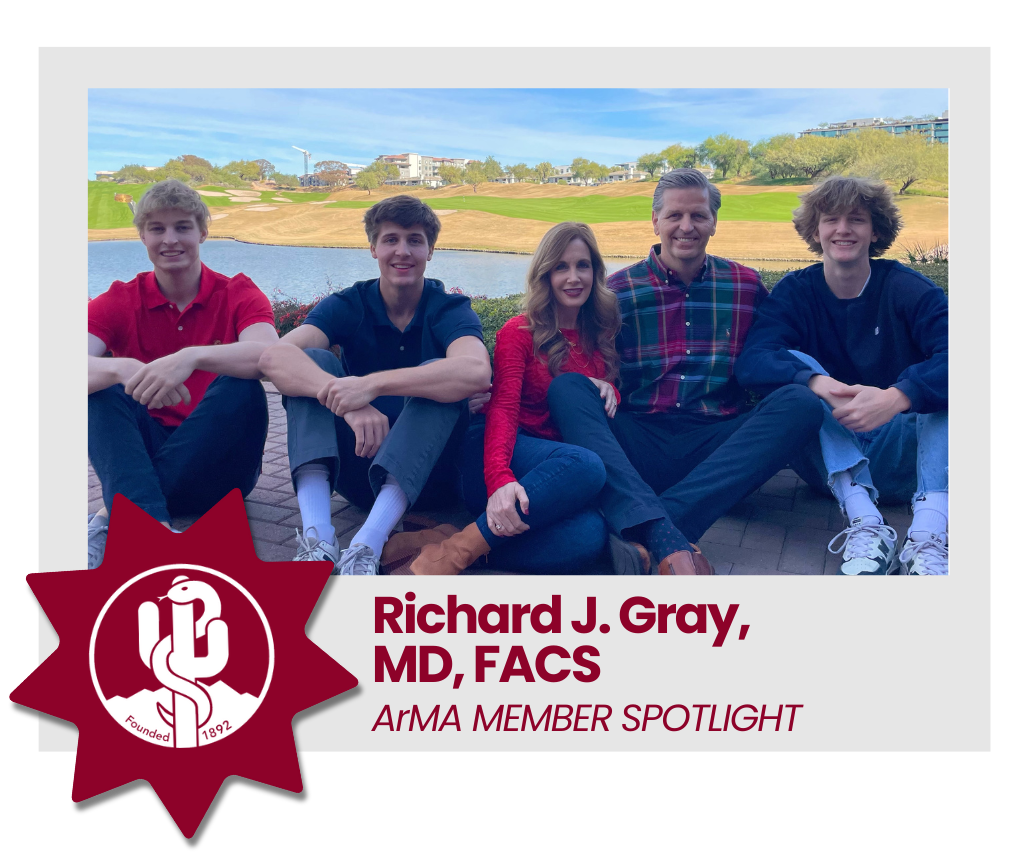
"Arizona offers an exceptional quality of life with a wealth of diverse lifestyle opportunities. Within just a couple of hours' drive, you can enjoy everything from expansive warm desert landscapes and stunning red rock formations to cooler mountain ranges and pine forests. The friendliness and warmth of the people here are also remarkable. I’ve also noticed that many residents are from the Midwest who bring a welcoming “Midwest nice” attitude that makes the community feel especially inviting. Additionally, the strong spirit of collaboration and mutual support here is so noticeable – people are genuinely willing to help one another and offer their time and assistance."
Why is ArMA important to you and the physicians you lead?
"The Arizona Medical Association has long been the leading voice in public policy for Arizona's "House of Medicine." ArMA has been and will continue to be on the front lines of legislative debates on critical issues involving medical care – ranging from protecting the physician/patient relationship, advocating for graduate medical education funding, and more. And ArMA's long-standing "Doctor of the Day" program at the Legislature is an immensely effective way to build strong relationships with lawmakers and showcase the vital role of physicians in tomorrow's healthcare. Mayo's physicians have played a prominent role in ArMA's committee and leadership structure, and I'm confident they will continue to do so in the years to come.”