ArMA Member Spotlight: Meet Dr. Charles Kornblau
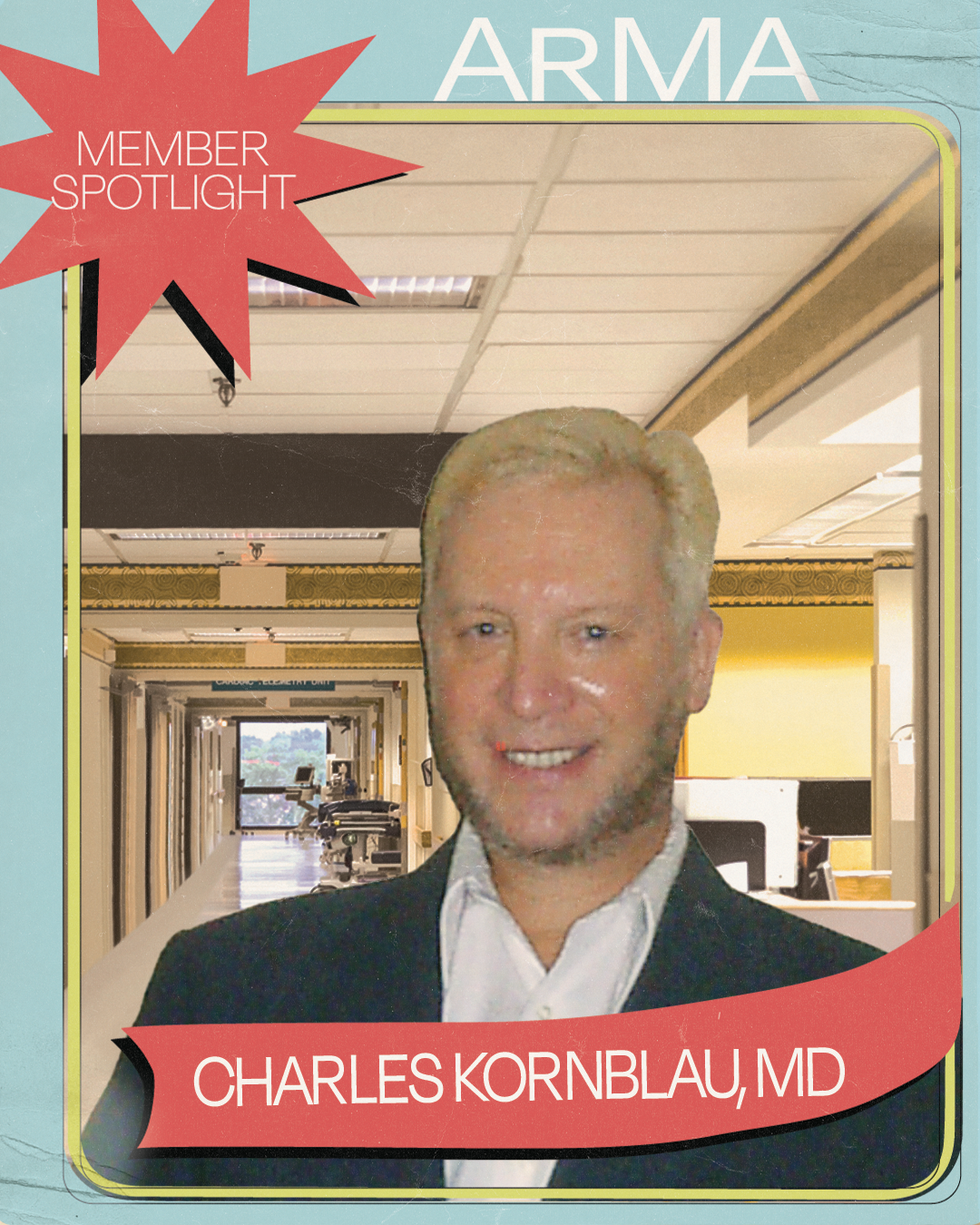
We are excited to introduce this month's ArMA Member Spotlight, Charles Kornblau, MD. Dr. Kornblau recently moved to Arizona from the East Coast and currently serves as a hospitalist at the Carl T. Hayden Veterans' Hospital in Phoenix.
In his interview for our Member Spotlight, Dr. Kornblau shares details from his time in the United States Army. Having built a foundation of perseverance and dedication, he now uses his over 30 years of medical experience to care for our local veterans.
As we prepare to celebrate our nation's founding on July 4, we thank all those who, like Dr. Kornblau, have dedicated part of their lives to serving our country and its communities.
Learn more about Dr. Kornblau’s journey with medicine below!
What inspires you?
Being of service to others really is a driver for me and has been a central part of my career choices. This is especially so when able to provide care to fellow veterans in a comprehensive manner.
What success in your career are you most proud of?
I was very fortunate to serve as an army medevac Pilot in the Persian Gulf I, once upon a time. Although I was just out of medical school, the challenges and associated camaraderie have made for an amazing professional foundation for me that further empowers me in my continued health care and civilian work with Veterans.
If you weren't pursuing medicine, what would you be up to right now?
Well, there are so many things in this world to enjoy and contribute to. I would probably be traveling more and perhaps devote a bit more time to exploring different cultures.
What is one message you would give to your 18-year-old self?
Stay true to the course. When I was an officer in basic training, an instructor mentioned that a study was done among the army’s highest-identified common traits. Among them was a sense of dedication, perseverance, and willingness to see things through despite setbacks. I have tried to carry those thoughts forward over time.
How would you describe your approach to patient care?
I trained as an internist and worked mainly as a hospitalist in the east coast NY / NJ area. I have been fortunate enough to combine work and at times travel with a focus on critical access. This has provided an opportunity to garner experience in diverse settings and comprehensive care. So, I tend to see myself more aligned with the FP approach. I have further attempted to refine this to Veteran care when able to serve that or other patient populations.
How do you define success?
That's a most interesting question. I suppose for me, if I am able to provide meaningful care to others and have made a difference in their wellness, I suppose I am moving toward being a bit more successful. I am still working on it to be sure.
What prompted you to become involved in organized medicine?
I am newer to this area and enjoy participating in and meeting talented people that organizations such as ArMA offer. I was active with policy concerns with the ACP when a resident and was fortunate to have studied policy and related at the Kennedy School in Cambridge.
Why is ArMA important to you and your colleagues?
As mentioned above, it is a dynamic organization with talented people engaged in making a difference. I really liked the annual meeting that was held this past May and its focus on leadership. It was the first time I have seen this as a focus with such a high-end panel of speakers. It really stood out.